
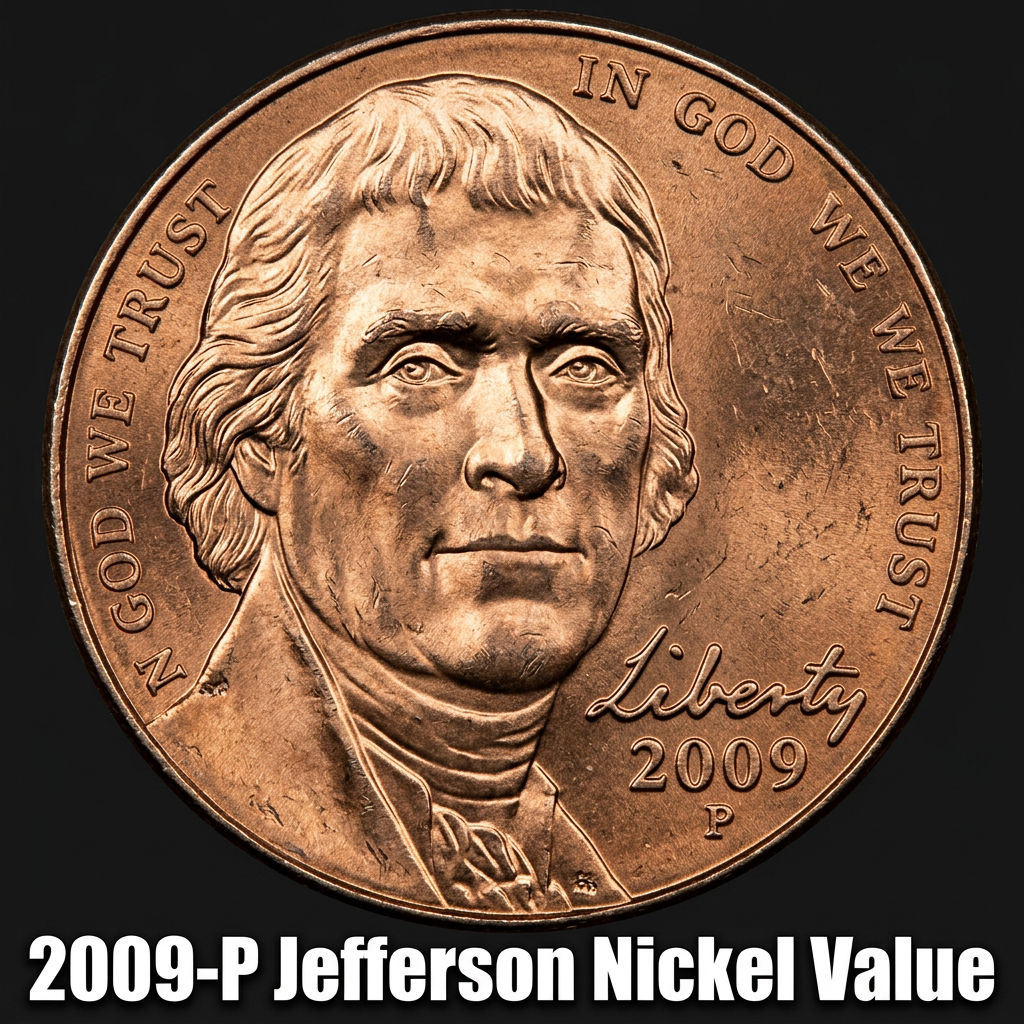
The 2009-P Jefferson Nickel is worth anywhere from $0.05 in worn condition to over $1,500 in top-tier mint state with Full Steps. If you just found one of these in your pocket change, you are holding a modern rarity that is far more valuable than your average five-cent piece.
Why the 2009-P Jefferson Nickel is So Rare
If you are looking at a 2009-P Jefferson Nickel today, you might wonder why a coin barely over a decade old is considered a “key date” by collectors. The answer lies in the Great Recession of 2008 and 2009. During this economic downturn, the demand for new coinage plummeted because people were spending less and banks had a surplus of older coins circulating. Consequently, the United States Mint drastically reduced production to save costs.
While billions of nickels are usually minted annually, the Philadelphia Mint produced only about 39.8 million nickels in 2009. For comparison, in 2015, they made over 700 million. This makes the 2009-P one of the lowest mintage circulation coins in the modern era. Identifying these low-production coins is easy when you use a top coin identifier app to check the dates and mint marks of the change in your jar.
Because so few were released into circulation, many of these coins were snatched up by savvy investors. If you happen to find one in your laundry or under a car seat, it is worth keeping. Even in “circulated” condition, where the coin shows some scratches or wear, it can sell for a premium over its face value simply because collectors need it to fill their albums. Using the CoinHix app can help you track these small but significant finds.
Grading and Determining the Quality of Your Nickel
To understand the actual market value of your coin, you must look at its “grade.” Most 2009-P nickels found in a wallet will be in “Circulated” or “About Uncirculated” condition. These are worth roughly $0.25 to $1.00. However, the real money is found in “Uncirculated” or “Mint State” (MS) coins. These are coins that never actually functioned as money and were preserved in rolls or mint sets.
Professional grading services like PCGS or NGC use a 70-point scale. A 2009-P nickel at MS65 is relatively common among collectors, but once you hit MS66 or MS67, the price jumps significantly. Collectors also look for the “Full Steps” (FS) designation. This refers to the steps leading up to Monticello on the reverse of the coin. If all five or six steps are clearly visible and not blurred together, the coin is far more valuable. You can check current market trends for high-grade specimens by viewing the 2009-P Jefferson Nickel Full Steps auction records.
If you aren’t sure if your coin has Full Steps, don’t worry. Most everyday people will find “Average Circulated” coins. While these won’t buy you a new car, they are still iconic pieces of history. For a quick mobile assessment, the CoinHix app allows you to take a photo of your coin to get an instant idea of what you are looking at before you spend money on professional grading.
2009-P Jefferson Nickel Value Chart
Below is a breakdown of what you can expect to receive for a 2009-P nickel based on its condition. Most coins found in pocket change will fall into the “Circulated” or “AU” categories.
| Condition / Grade | Estimated Market Value |
|---|---|
| Circulated (Average Wear) | $0.25 – $0.75 |
| About Uncirculated (AU58) | $1.50 – $3.00 |
| Mint State (MS63) | $5.00 – $12.00 |
| Mint State (MS65) | $25.00 – $45.00 |
| Mint State 66 with Full Steps (MS66FS) | $150.00 – $350.00 |
| Mint State 67 with Full Steps (MS67FS) | $1,000.00+ |
Identifying 2009-P Nickels and Mint Errors
The “P” on the 2009-P nickel stands for the Philadelphia Mint. You can find this mint mark on the obverse (front) of the coin, located just below the date “2009” on the right side. While the low mintage is the primary driver of value, error hunters also look for specific mistakes made during the minting process. These errors can turn a common-looking nickel into a high-value treasure.
Some common errors found in the 2009 series include Die Cracks, where a small line of raised metal appears across Jefferson’s face or the building of Monticello. Another popular error is the “Clipped Planchet,” where the coin looks like a bite was taken out of the edge. Because the CoinHix app community is constantly sharing new finds, it is a great place to see if your “weird-looking” nickel matches a known error.
If you are interested in a deeper dive into the specific mintage figures and comparative values against the Denver (D) mint, you can read more about the historical pricing of 2009 nickels online. Generally, the Philadelphia version is slightly more sought after in high grades, though both the P and D mints are considered rare birds in the nickel world.
How to Sell and Store Your 2009 Jefferson Nickel
If you discover you have a 2009-P nickel in great condition, the first thing you should do is stop touching it with your bare fingers. The oils from your skin can damage the luster of the coin over time. Place it in a PVC-free plastic flip or a cardboard “2×2” holder. Keeping the coin in pristine condition is the only way to ensure it reaches its maximum valuation.
When you are ready to sell, you have several options. For lower-value circulated coins, eBay is often the best marketplace. Many collectors are willing to pay a few dollars plus shipping to fill a hole in their collection. For high-grade “Full Steps” coins, you might consider a professional auction house or a reputable local coin shop. Always cross-reference prices across different platforms to make sure you are getting a fair deal.
The 2009-P Jefferson Nickel is a perfect example of why you should always check your change. It is a modern rarity hiding in plain sight. Whether you find a worn one worth fifty cents or a gem-quality one worth hundreds of dollars, it’s a fun piece of American economic history to have in your pocket.
Frequently Asked Questions
Q: Why is the 2009-P nickel more valuable than other years?
A: It is valuable because the United States Mint produced a very low number of nickels in 2009 due to the economic recession. With only 39.8 million made in Philadelphia, they are much harder to find than nickels from other years.
Q: Where is the mint mark on a 2009-P nickel?
A: The “P” mint mark is located on the front of the coin, right below the year 2009 on the bottom right side.
Q: Is a 2009-D nickel worth the same as a 2009-P?
A: Generally, they are very close in value. The Denver Mint (D) produced roughly 46.8 million nickels in 2009, which is also very low. In most circulated grades, they are worth about the same.
Q: How can I tell if my nickel has “Full Steps”?
A: Look at the back of the coin where the building (Monticello) is located. If you can see five or six distinct, horizontal lines representing the stairs without any scratches or blurring, it is considered a “Full Steps” coin and is much more valuable to collectors.