
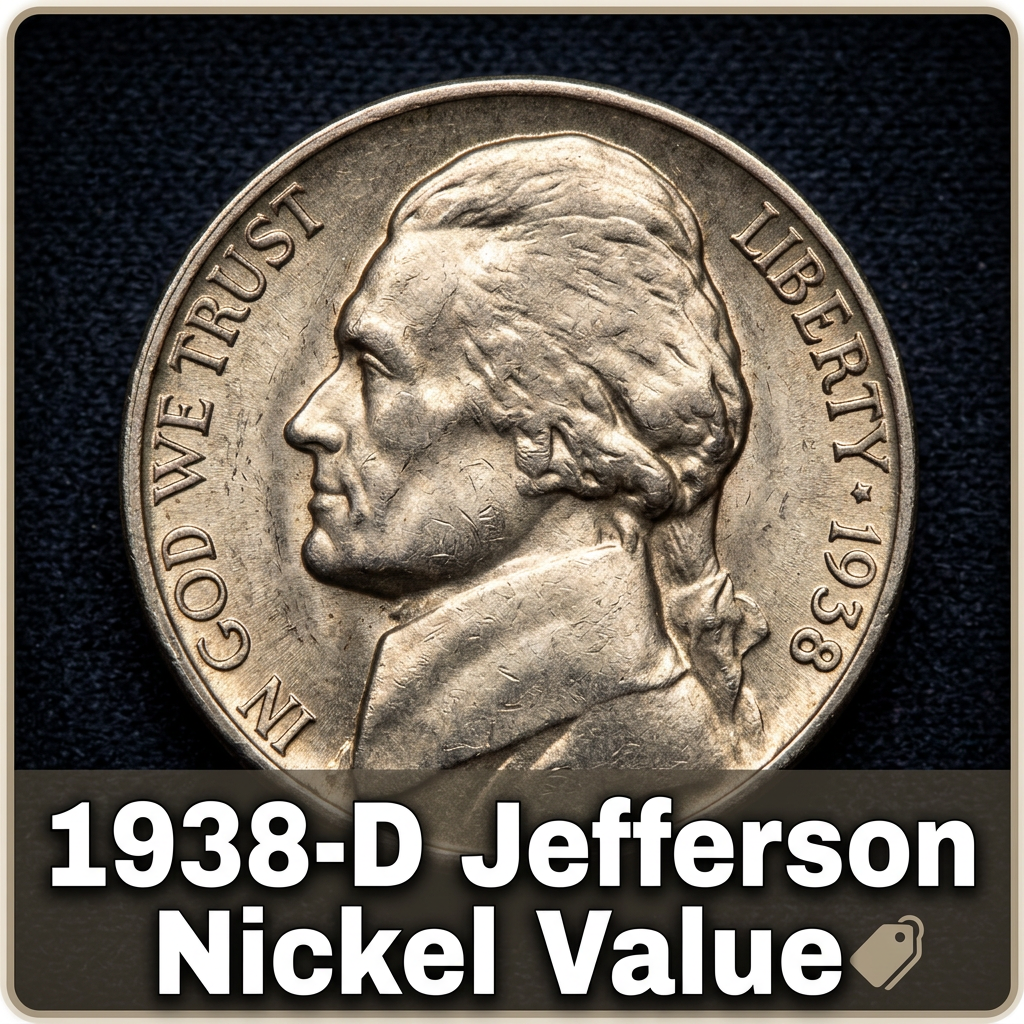
The 1938-D Jefferson Nickel is worth anywhere from $1 in worn condition to over $1,500 in pristine mint state with Full Steps. This coin marks the very first year of the Jefferson design, making it a highly sought-after piece for family collections and professional investors alike.
Understanding the Historical Significance of the 1938-D Nickel
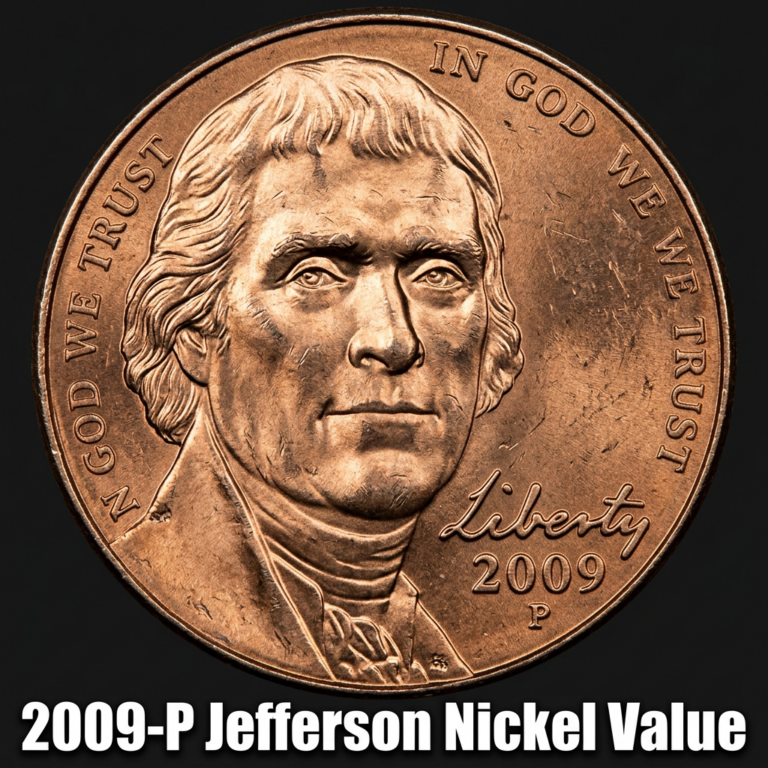
The year 1938 was a pivotal moment in American numismatic history. It was the transitional year where the United States Mint retired the beloved Buffalo Nickel and introduced the Jefferson Nickel, featuring Thomas Jefferson on the obverse and his home, Monticello, on the reverse. The “D” mint mark signifies that this particular coin was struck at the Denver Mint. Finding one of these in your change or an old jar is exciting because it represents the birth of a design that we still use in our pockets today.
If you are unsure whether you have a rare variety or a common circulation strike, using a top coin identifier app can help you distinguish the subtle details. For the 1938-D, the mint mark is located on the reverse side, situated to the right of Monticello, next to the rim. Because this was the first year of production, the quality control at the Denver Mint was relatively high, but finding examples that haven’t been scratched or worn down over eighty years of circulation is the real challenge for modern treasure hunters.
The 1938-D is particularly interesting to collectors because it had a lower mintage compared to the Philadelphia issue of the same year. While millions were made, the survival rate of high-quality specimens is much lower than people realize. If you have found one recently, you might want to use the CoinHix app to get a preliminary idea of its surface quality before deciding to spend money on professional grading services.
Current Market Values for the 1938-D Jefferson Nickel
When determining the value of your nickel, condition is everything. A coin that has been passed from hand to hand for decades will only be worth a small premium over its face value. However, coins that were saved in rolls or tucked away in piggy banks from the very beginning can command impressive prices. Collectors are specifically looking for “Mint State” coins, which are coins that never actually entered circulation and still retain their original “cartwheel” luster.
Many everyday Americans are surprised to learn that 1938-D Jefferson Nickel values can reach into the hundreds of dollars for MS66 or MS67 grades. Even in circulated “Extremely Fine” condition, you can expect to get a few dollars for the coin, which is a 100x return on its original face value. For those looking for a quick reference, the following table outlines the expected price ranges based on standard numismatic grades.
| Condition / Grade | Estimated Market Value |
|---|---|
| Good (G4) to Fine (F12) | $1.25 – $2.50 |
| Very Fine (VF20) to Extremely Fine (EF40) | $3.00 – $8.00 |
| About Uncirculated (AU50) | $10.00 – $15.00 |
| Mint State (MS60 – MS64) | $20.00 – $45.00 |
| Gem Mint State (MS65+) | $60.00 – $300.00 |
| MS66 with Full Steps (FS) | $500.00+ |
What Makes a 1938-D Nickel More Valuable
Aside from the grade, there are specific characteristics that can send the price of a 1938-D nickel skyrocketing. The most famous of these is the “Full Steps” designation. On the reverse of the coin, the steps of Monticello are often blurry or struck weakly. If a coin has five or six clearly defined, uninterrupted steps, it receives the “FS” label from grading companies like PCGS or NGC. A 1938-D with Full Steps is a rare prize that serious collectors will battle over in auctions.
Another factor to consider is the presence of mint errors. While not as common as in other years, doubled dies or RPM (Repunched Mint Mark) varieties can occasionally be found. You can find more detailed 1938 Jefferson Nickel value information regarding these rare varieties by checking specialized numismatic databases. If you notice the “D” looks like it was stamped twice, or if the lettering seems to have a ghost-like secondary edge, you might be holding an error coin worth significant money.
Because the CoinHix app utilizes advanced image recognition, it is a great tool for spotting these minor imperfections that the naked eye might miss. When you are sorting through a collection, having a digital assistant to flag potential high-value items can save you from accidentally spending a $50 coin at the grocery store.
How to Identify and Preserve Your Coin Heritage
If you have discovered a 1938-D Jefferson Nickel, your first instinct might be to clean it to make it look shiny. Stop! Never clean an old coin. Cleaning a coin with chemicals or even a soft cloth creates micro-abrasions that destroy its numismatic value. A “shiny” cleaned coin is almost always worth less than a dirty, original coin. Collectors prefer the natural patina or “toning” that develops over decades, as it proves the coin’s authenticity and history.
To preserve the value of your 1938-D nickel, place it in a PVC-free flip or a cardboard 2×2 holder. This prevents skin oils and moisture from causing further oxidation. If you believe your coin is in the MS65 range or higher, you should consider professional grading. Before you spend the fees for grading, however, use the CoinHix app to compare your coin against high-resolution photos of certified specimens to see if the quality matches up.
Owning a first-year-of-issue coin like the 1938-D is a great way to start a hobby in coin collecting. It is an affordable entry point into the world of “junk silver” and vintage coinage, even though the nickel itself is composed of 75% copper and 25% nickel. While it doesn’t contain silver like the “War Nickels” of 1942-1945, its historical status keeps its demand high among those who appreciate the legacy of American presidents and the evolution of our currency.
Frequently Asked Questions about the 1938-D Jefferson Nickel
Q: How can I tell if my 1938 nickel is from the Denver Mint?
A: Look on the reverse side (the tail’s side) of the coin. To the right of Monticello, near the rim at the 3 o’clock position, you should see a small “D”. If there is no letter, it was minted in Philadelphia. If there is an “S”, it was minted in San Francisco.
Q: Is the 1938-D nickel rare?
A: It is not “rare” in a general sense, as over 5.3 million were minted. However, it is considered a “semi-key date” because it has the lowest mintage of the three mints that produced Jefferson nickels in 1938. It is much harder to find in high grades than the Philadelphia version.
Q: Why is “Full Steps” so important for the value?
A: Full Steps (FS) indicates a very strong strike from the mint. Most nickels have “mushy” details on the steps of Monticello due to the wear of the dies or the pressure of the press. A coin with crisp steps is rare and represents the highest quality of production possible.
Q: Should I get my 1938-D nickel appraised?
A: If the coin looks like it just came from the mint—meaning it has no scratches, no wear on Jefferson’s hair, and plenty of shine—it is worth getting appraised. If it looks like a normal nickel you’d find in your pocket, it is likely worth between $1 and $5, which is less than the cost of an appraisal.