
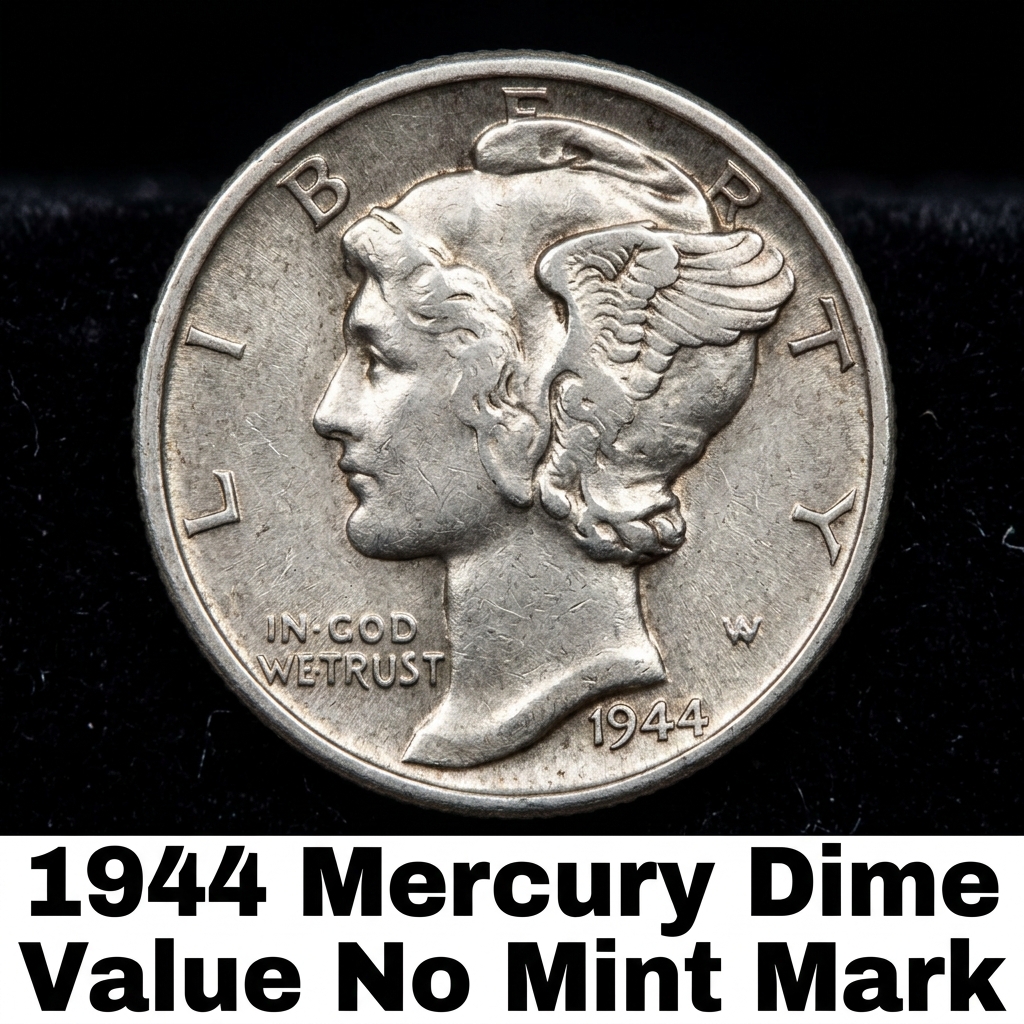
The 1944 Mercury Dime is worth anywhere from $2.50 in worn condition to over $1,500 in pristine uncirculated condition with Full Bands. Most of these silver treasures found in pocket change or old jars are valued primarily for their silver content and historical charm rather than extreme rarity.
How to Identify a 1944 Mercury Dime With No Mint Mark
If you have a 1944 dime featuring the winged head of Liberty, you are holding a piece of American history. Many beginners look for a small letter on the back of the coin to determine its origin. If your coin has “No Mint Mark,” it simply means it was struck at the main Philadelphia Mint. During 1944, the Philadelphia Mint produced over 231 million of these dimes, making them the most common date in the entire series. Because so many were made, finding one today is quite common for casual treasure hunters using a top coin identifier app to scan their collections.
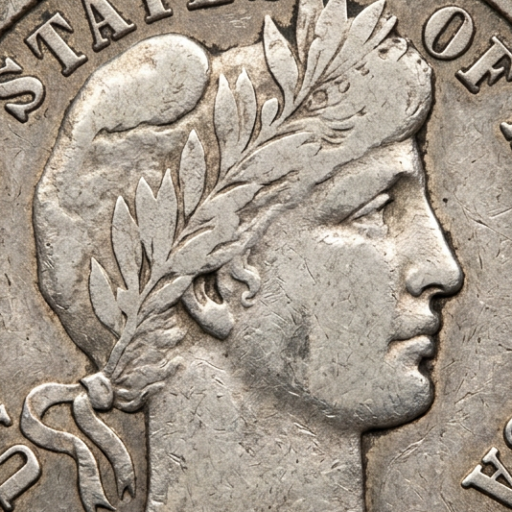
The design, officially known as the Winged Liberty Head, was created by Adolph A. Weinman. It was nicknamed the “Mercury” dime because Liberty’s winged cap resembled the Roman messenger god. When examining your coin, look at the reverse side near the bottom left, next to the “E” in “ONE.” If that space is blank, you have the Philadelphia version. While millions of these coins were circulated, the high production numbers mean that only those in exceptional physical condition or those with specific minting characteristics command premium prices from collectors.
To get a better sense of how condition impacts the market value, you can download the CoinHix app. This tool helps you compare your coin’s appearance against high-resolution images to see where it sits on the grading scale.
Current Market Value and Pricing Chart
For most “junk silver” collectors, a 1944 dime is worth its weight in silver. Each coin contains 90% silver and 10% copper, roughly 0.07234 ounces of pure silver. When silver prices rise, even the most worn-out 1944 dime increases in value. However, numismatic value—the value to collectors—starts to climb once the coin reaches “About Uncirculated” or “Mint State” levels. In these grades, the coin still has its original luster and shows very little wear on Liberty’s hair or the fasces on the reverse.
The professional grading of your coin will determine if it is a $3 item or a $300 item. Collectors are particularly interested in the “Full Bands” (FB) designation. This refers to the horizontal bands holding the bundle of sticks (fasces) on the reverse. If these bands are clearly separated with no blending, the coin is considered a premium strike. You can find more detailed data on 1944 Mercury Dime MS values which highlight how these grading nuances affect the final price tag.
| Condition / Grade | Estimated Value Range |
|---|---|
| Good (G-4) to Very Good (VG-8) | $2.25 – $2.75 |
| Fine (F-12) to Very Fine (VF-20) | $3.00 – $4.50 |
| Extremely Fine (XF-40) | $5.00 – $8.00 |
| About Uncirculated (AU-50) | $10.00 – $15.00 |
| Mint State (MS-60 to MS-65) | $20.00 – $65.00 |
| Mint State with Full Bands (MS-67 FB) | $150.00 – $1,500+ |
Understanding the Importance of the Full Bands Designation
Among the community of serious coin enthusiasts, the strike quality is everything. While a typical 1944 dime might look shiny, it may lack the sharp detail required for a high-tier grade. “Full Bands” is a term used by grading services like PCGS or NGC to describe a Mercury Dime where the central horizontal bands on the reverse are fully split. Because the 1944 Philadelphia mintage was so large, the dies often became worn, resulting in “mushy” details.
Finding a 1944 Philadelphia dime with perfectly crisp, separated bands is surprisingly difficult. While a standard MS-65 dime might sell for under $50, an MS-65 with the FB designation can easily double or triple in price. For those holding onto heirlooms, checking for this detail is the difference between a common silver coin and a rare collector’s piece. For a comprehensive look at what makes these coins special, you can review this 1944 Mercury Dime value guide and coin history.
If you aren’t sure if your coin has Full Bands, the CoinHix app can provide magnified views and expert tips on what to look for. Using artificial intelligence, CoinHix helps bridge the gap between a novice collector and a seasoned numismatist by identifying minor details that the naked eye might miss.
Key Errors and Varieties to Watch For
While the 1944 Philadelphia Mercury Dime does not have a “major” famous error like the 1942/1 overdate, there are several minor varieties that can increase the value. Some collectors look for “Double Die” errors, though these are quite rare in this specific year. Look for doubling in the letters of “IN GOD WE TRUST” or in the date itself. Any doubling usually requires a magnifying glass to see clearly.
Another interesting aspect of the 1944 mintage is the presence of “clipped planchets” or “off-center strikes.” These happen when the machine doesn’t align the silver blank properly before hitting it with the die. An off-center 1944 dime can be worth $50 to $100 depending on how much of the design is missing. If you find a coin that looks “weird” or “deformed,” don’t clean it! Cleaning a coin actually destroys its value to collectors.
Instead of scrubbing the coin, use a soft cloth to handle it by the edges. Most collectors prefer a coin with “patina” or “toning”—a natural discoloration caused by oxygen over decades—rather than a shiny coin that was polished with chemicals. A beautifully toned 1944 Mercury Dime with hues of blue or gold can often sell for a significant premium at auction.
Frequently Asked Questions
Q: Is a 1944 dime strike with No Mint Mark rare?
A: No, the 1944 Mercury Dime with no mint mark is one of the most common coins in the series, with over 231 million minted in Philadelphia. Its value is mostly tied to its silver content unless it is in perfect uncirculated condition.
Q: How can I tell if my 1944 dime is made of silver?
A: All Mercury Dimes minted in 1944 are 90% silver. You can tell by looking at the edge of the coin; it will be a solid silver color without the copper stripe found on modern dimes. It also has a distinct high-pitched “ring” when tapped gently.
Q: Where is the mint mark located on a Mercury Dime?
A: The mint mark is found on the reverse (back) of the coin, located to the left of the base of the fasces (the bundle of sticks). If you see a “D,” it was made in Denver; an “S” means San Francisco; no letter means Philadelphia.
Q: What is the highest price ever paid for a 1944 Mercury Dime?
A: While common versions sell for a few dollars, a 1944 Mercury Dime graded MS-68 with Full Bands has sold for over $10,000 at major auctions. Condition is the primary driver of value for this specific year.