
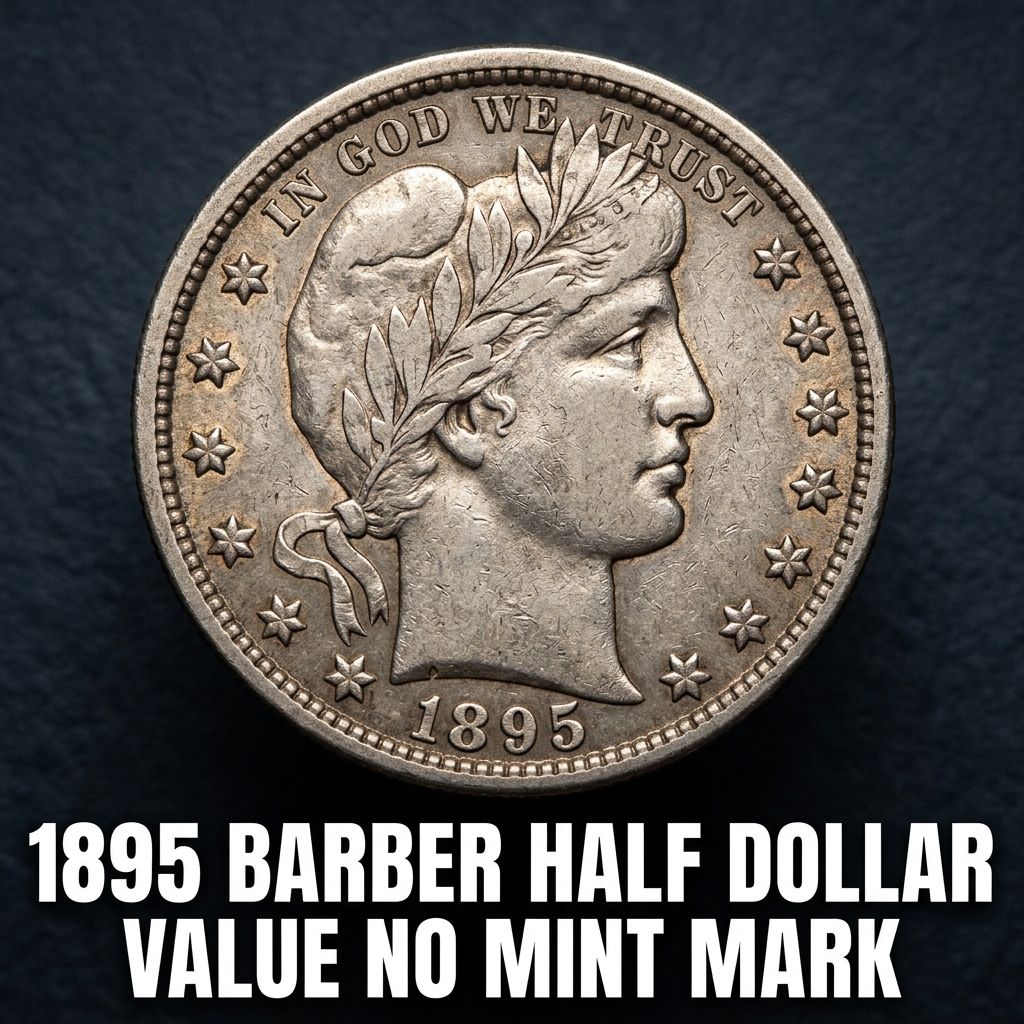
The 1895 Barber Half Dollar is worth anywhere from $40 in heavily worn condition to over $15,000 for specimens in pristine mint state. Finding one of these silver treasures in a drawer or a family collection is an exciting discovery because of its age and historical significance.
Historical Context of the 1895 Philadelphia Barber Half Dollar
The 1895 Barber Half Dollar, designed by Chief Engraver Charles E. Barber, is a classic piece of American numismatic history. For everyday Americans who come across this coin, the most important thing to notice is the absence of a mint mark. Coins struck at the Philadelphia Mint in 1895 do not feature a small letter on the reverse under the eagle. This makes them distinct from those minted in New Orleans (O) or San Francisco (S). While the 1895 Philadelphia issue is not the rarest in the series, it is still a highly sought-after 90% silver coin that commands a significant premium over its metal content.
If you are unsure whether your coin is a genuine 1895 issue or if you want to check its specific condition, using a top coin identifier app can help you get an instant estimate of its potential market value. In 1895, the U.S. Mint produced approximately 1.8 million of these half dollars in Philadelphia. Over the last century, many of these were lost to circulation wear or melted down for their silver content, leaving a relatively small number available for collectors today.
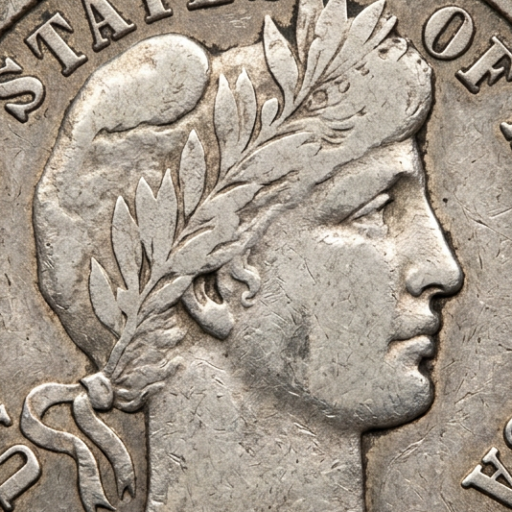
When you look at your coin, you are seeing a portrait of Liberty wearing a Phrygian cap and a laurel wreath. The reverse features a heraldic eagle, modeled after the Great Seal of the United States. Because these coins circulated heavily during the late 19th and early 20th centuries, finding one with clear details in Liberty’s hair or the eagle’s feathers is a rare and profitable occurrence. If you are also holding other silver coins from this era, you might want to compare the 1895 silver dollar value to see how different denominations from the same year perform in the collectors’ market.
Understanding the 1895 Half Dollar Value Based on Condition
The value of your 1895 Barber Half Dollar is almost entirely dependent on its “grade” or state of preservation. Most coins found by non-collectors fall into the “Good” or “Very Good” categories. In these states, the coin will look flat, with the word “LIBERTY” on the headband being either invisible or very faint. Even in this worn condition, the coin is valuable because it is a “better date” than many common-year Barber halves.
As you move up the grading scale to “Fine” or “Extremely Fine,” the price jumps significantly. A coin in Fine condition will show at least three letters of “LIBERTY” clearly. To get a precise reading on these tiny details without being an expert, you can use the CoinHix app to zoom in and identify the strike quality. High-grade specimens—those that look like they were never spent at a store—are the ones that reach the thousand-dollar mark at major auctions.
Professional collectors look for original luster, which is the “shimmer” a coin has when it is freshly minted. Most 1895 halves have lost this luster and turned a greyish-silver or even blackish tone due to oxidation. While cleaning might seem like a good idea to make the coin look better, you should never clean an old coin. Cleaning can destroy the numismatic value, turning a $500 coin into a $40 coin instantly. Use CoinHix to catalog your find and see how its surface quality affects the final price.
Current Market Price Guide for 1895 No Mint Mark Half Dollars
The market for Barber silver is currently very strong. Investors often buy these coins both for their silver weight and their historical rarity. While the silver melt value provides a “floor” for the price (usually around $10-$15 depending on the market), the collector value starts much higher. Below is a breakdown of what you can expect to receive for an 1895 Philadelphia Half Dollar at different grades.
| Condition / Grade | Estimated Market Value |
|---|---|
| Good (G-4) | $40 – $55 |
| Fine (F-12) | $110 – $145 |
| Extremely Fine (XF-40) | $375 – $450 |
| About Uncirculated (AU-50) | $650 – $800 |
| Mint State (MS-63) | $1,850 – $2,500 |
| Gem Mint State (MS-65+) | $12,000+ |
Identifying Mint Marks on an 1895 Silver Half Dollar
To be sure you have the “No Mint Mark” version, you must look at the reverse (the back) of the coin. Look directly under the eagle’s tail feathers and above the “AL” in “HALF DOLLAR.” If that space is blank, your coin was minted in Philadelphia. If you see a small “O,” it was minted in New Orleans; an “S” means it was minted in San Francisco.
In 1895, the Philadelphia mint mark scarcity is considered “moderate.” While the New Orleans and San Francisco versions often fetch higher prices in mid-range conditions, a Philadelphia 1895 Half Dollar in high grade is actually quite rare. This is because Philadelphia was the primary hub for commerce, and most coins struck there were sent directly into circulation to be used by the public.
If you find a mint mark, it changes the value profile entirely. For example, an 1895-S in high grade can be a “condition rarity.” If you are managing a large collection of various years and mint marks, the CoinHix app provides an easy way to keep track of each specific variation and its current auction performance. Knowing exactly what you have is the first step in ensuring you don’t get underpaid by a local pawn shop or coin dealer.
Why the 1895 Philadelphia Half Dollar is a Collectors Favorite
The Barber Half Dollar series is notoriously difficult to complete in high grades, which is why the 1895 issue is so popular. It comes from a decade of economic transition in the United States, just after the Panic of 1893. Coins from this era represent a time when five cents could buy a meal, and a half dollar was a significant amount of money—equivalent to nearly $20 in purchasing power today.
Collectors love the 1895 because it represents the “workhorse” of American currency. Because so few people could afford to “save” a half dollar back then, the survival rate of high-quality pieces is very low. This creates a “supply and demand” curve that favors the seller. If you have an 1895 No Mint Mark coin that still shows the lines in the eagle’s wings or the word “LIBERTY” clearly, you are holding a piece of history that a serious collector would love to add to their set.
Finalizing the value involves checking for any damage like scratches, rim dings, or holes. Even a rare 1895 coin loses about 50-70% of its value if it has been used as jewelry or harshly cleaned. Always handle your silver coins by the edges to prevent skin oils from damaging the surface further.
FAQ
Q: Where is the mint mark on an 1895 Barber Half Dollar?
A: The mint mark is located on the reverse side of the coin, specifically under the eagle’s tail and above the words “HALF DOLLAR.” If no letter is present, it was minted in Philadelphia.
Q: Is the 1895 Half Dollar made of real silver?
A: Yes, all Barber Half Dollars minted between 1892 and 1915 are composed of 90% silver and 10% copper. This gives them an inherent “melt value” regardless of their condition as a collectible.
Q: Should I get my 1895 Barber Half Dollar professionally graded?
A: If you believe your coin is in “Extremely Fine” condition or better (meaning most of the fine details are visible), it is worth having it graded by a service like PCGS or NGC. If it is heavily worn, the cost of grading might be more than the coin’s value increase.
Q: How can I sell my 1895 Half Dollar for the best price?
A: Avoid pawn shops. Instead, look for reputable local coin dealers or specialized silver auctions. Using an app to determine a baseline price beforehand will ensure you have the knowledge needed to negotiate a fair deal.