
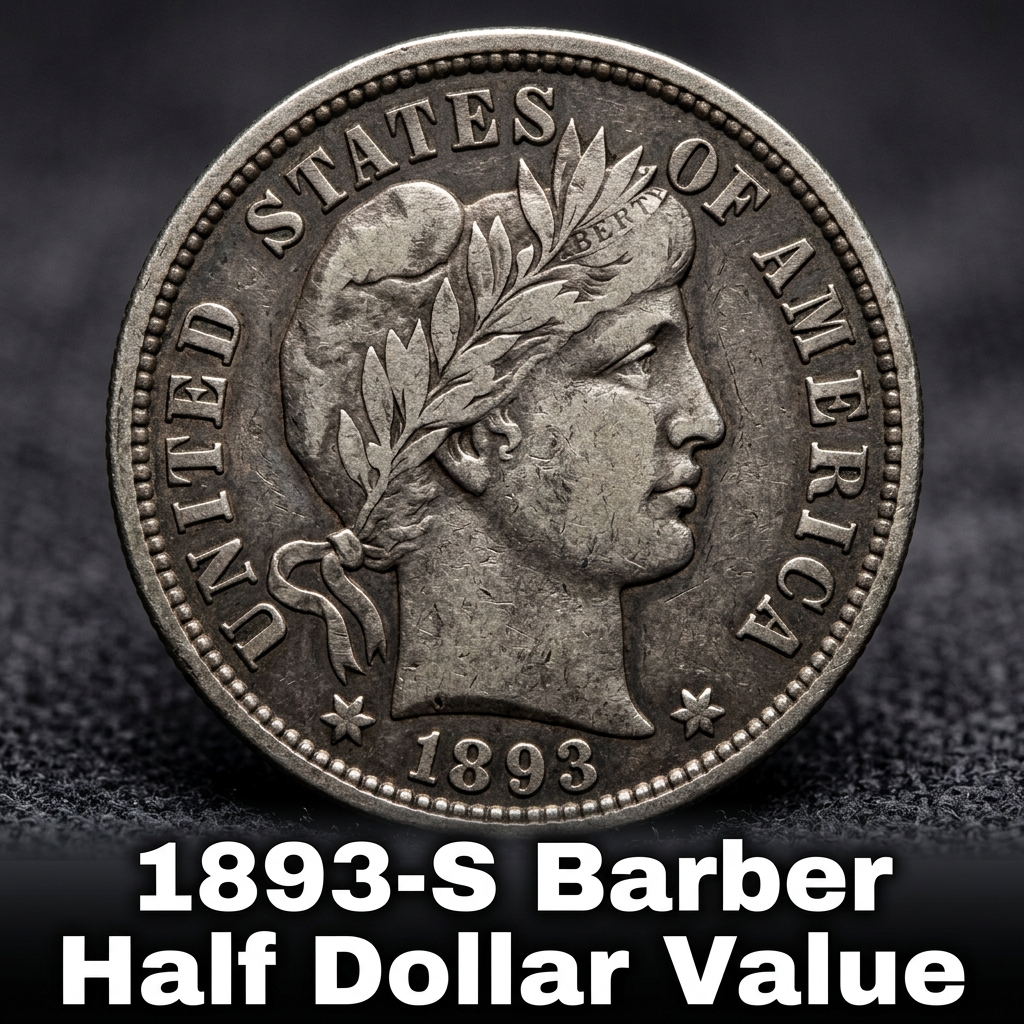
The 1893-S Barber Half Dollar is worth anywhere from $120 in heavily worn condition to over $15,000 for rare mint state specimens. If you have discovered one of these silver coins in an old collection or a family vault, you are holding a genuine piece of American history that carries significant premium value today.
Understanding the Rarity of the 1893-S San Francisco Mint Mark
The 1893-S Barber Half Dollar is a standout issue within the series designed by Charles E. Barber. While the Philadelphia mint produced nearly two million halves that year, the San Francisco mint struck only 740,000 coins. This lower mintage makes the “S” mint mark much more desirable to collectors than the common Philadelphia version. In the world of numismatics, lower supply almost always translates to higher demand and higher prices.
When you flip the coin to the reverse side, look specifically for the small “S” located just below the eagle’s tail feathers. If you find it, you are looking at a “semi-key date” that is highly sought after. Even in low grades where the details are mostly smoothed away, this coin maintains a value well above its silver melt content. To get an instant estimate of what your specific coin looks like compared to known grades, many hobbyists use the top coin identifier app to get a head start on valuation.
Using tools like CoinHix can also help you organize your finds and track the market fluctuations for San Francisco minted silver. Because these coins circulated heavily during the late 19th century, finding one with “full Liberty” letters on the headband is quite rare and can bump the price into the thousands of dollars.
Current Market Value and Price Chart for 1893-S Half Dollars
The value of your 1893-S Barber Half Dollar depends primarily on its “grade,” which is a measure of how much wear the coin has sustained over the last 130 years. Most coins found today are in “Good” to “Very Good” condition, meaning they are quite flat but still have clear outlines. However, if your coin still has a luster or shiny surface, the value skyrockets.
It is interesting to note that while the half dollar is valuable, other coins from the same era also command high prices; for example, collectors often compare the scarcity of this half to the 1893 Morgan silver dollar price guide to see how different denominations from that specific year perform at auction.
Below is a breakdown of what you can expect to receive for an 1893-S Barber Half Dollar based on professional grading standards:
| Condition / Grade | Estimated Market Value |
|---|---|
| Good (G-4) | $120 – $150 |
| Very Good (VG-8) | $210 – $280 |
| Fine (F-12) | $450 – $600 |
| Very Fine (VF-20) | $900 – $1,150 |
| Extremely Fine (XF-40) | $2,200 – $2,800 |
| About Uncirculated (AU-50) | $4,500 – $5,800 |
| Mint State (MS-63+) | $12,000 – $25,000+ |
Key Factors Influencing the 1893-S Silver Half Dollar Price
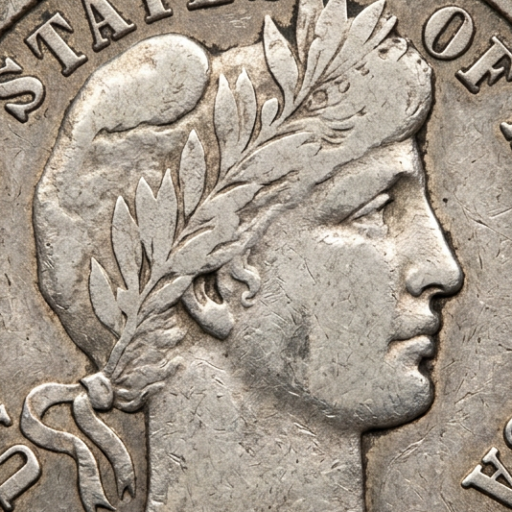
The most significant factor for the 1893-S Barber Half Dollar Value is the preservation of the word “LIBERTY” on the crown of the head. In the grading world, we look at the headband of Lady Liberty. If the letters are fully visible, the coin is at least in “Fine” condition. If the letters are gone, it is likely “Good” or “About Good.”
Surface quality is the second major factor. If a coin has been cleaned with chemicals or polished to look shiny, its numismatic value will drop by 50% or more. Collectors prefer original, “dirty” grey toning over a cleaned surface. Always handle your silver coins by the edges and never attempt to scrub them.
Before you take your coin to a dealer, you might want to use the CoinHix app to compare your coin’s appearance with high-resolution photos of graded pieces. This allows you to have a realistic expectation of the grade before a professional appraisal.
Historical Significance and Why Collectors Want This Coin
The Barber Half Dollar series was introduced in 1892 to replace the aging Seated Liberty design. By 1893, the San Francisco mint was heavily involved in producing silver coinage to support the economy of the Western United States. Because these coins were “workhorse” denominations, they were used daily in saloons, grocery stores, and for payroll.
Finding an 1893-S in high grade is difficult because so few people thought to save them at the time. A half dollar in 1893 could buy a significant amount of food, so most people spent them immediately. This lack of “hoarding” resulted in the scarcity of mint-state examples we see today.
If you find that your 1893-S is in particularly good shape, it may be worth sending to a professional grading service like PCGS or NGC. A certified grade can add hundreds of dollars to the final sale price by providing a guarantee of authenticity and condition to the buyer. Using CoinHix can help you keep a digital record of these certifications and track the total value of your burgeoning collection.
How to Identify a Genuine 1893-S Barber Half Dollar
Because of its high value, the 1893-S is sometimes a target for counterfeiters or “added mint mark” alterations. Fraudsters might take a common 1893 Philadelphia coin and attempt to glue an “S” onto the back. To identify a genuine coin, you should check the weight and diameter. A real silver Barber Half Dollar should weigh approximately 12.5 grams and be composed of 90% silver and 10% copper.
The mint mark on a genuine 1893-S should look like it is part of the metal, not sits on top of it. Looking at the coin under a 10x magnifying glass is the best way for a beginner to spot inconsistencies. If the “S” looks crooked or has a different texture than the rest of the coin, it might be an alteration.
Fortunately, modern technology has made it much easier for the average person to spot red flags. If you’re unsure, comparing your coin’s features against a database of known authentic examples can save you from a bad deal or provide the confidence you need to sell your coin for a fair price.
Frequently Asked Questions about the 1893-S Barber Half
Q: Where is the mint mark on the 1893-S Barber Half Dollar?
A: The “S” mint mark is located on the reverse (back) of the coin, centered directly below the eagle’s tail feathers and above the letters “HALF DOLLAR.”
Q: Is this coin made of real silver?
A: Yes, all Barber Half Dollars minted between 1892 and 1915 are made of 90% silver. Even if the coin is too worn to have collector value, it is still worth its weight in silver.
Q: Should I clean my 1893-S coin to make it look better?
A: No! Never clean your coins. Cleaning causes microscopic scratches that permanently damage the coin’s surface and significantly reduce its market value to collectors.
Q: What is the most an 1893-S Barber Half has ever sold for?
A: In extremely high “Mint State” grades (MS-66 or higher), these coins have been known to sell for over $50,000 at major auctions, though these are exceptionally rare.