
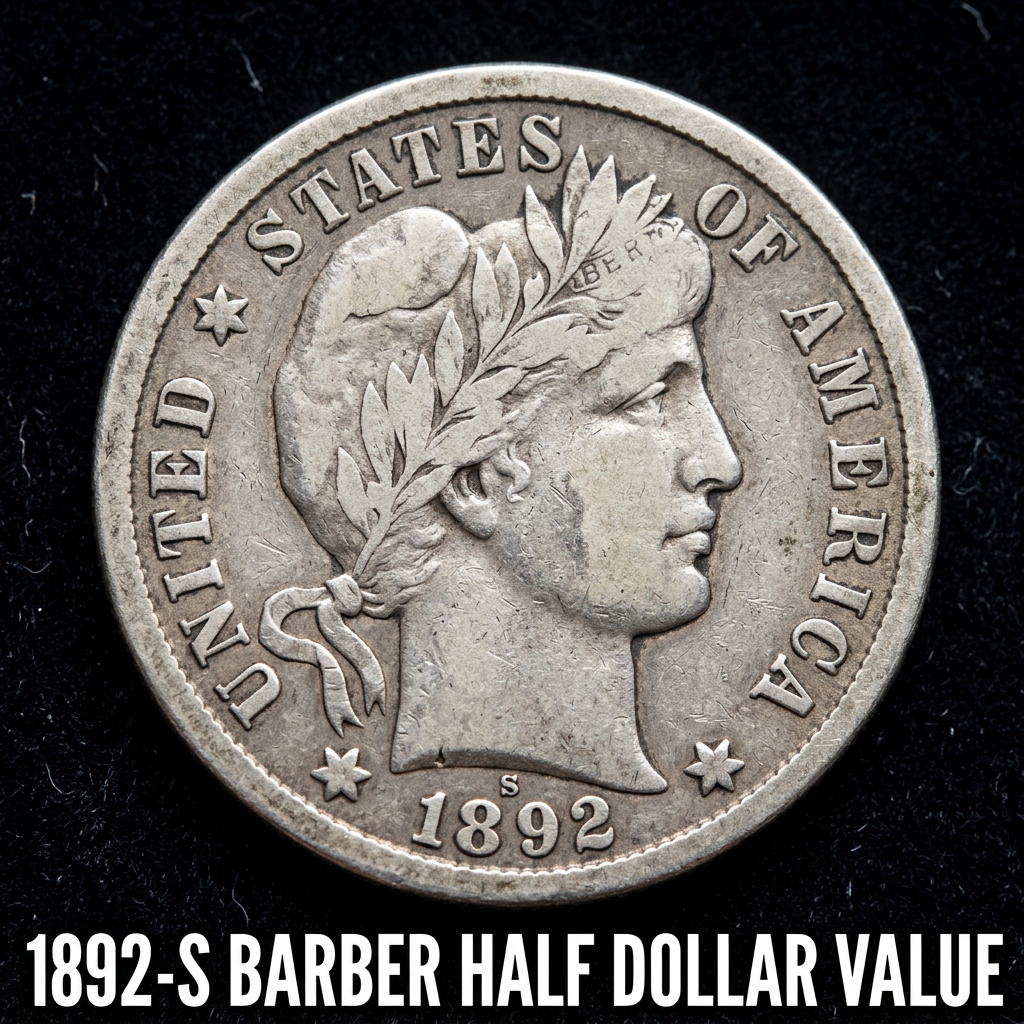
The 1892-S Barber Half Dollar is worth anywhere from $150 in heavily worn condition to over $15,000 for high-grade mint state examples. This specific coin is a standout rarity from the very first year of the Barber series, making it a “must-have” for serious numismatists and a lucky find for any casual owner.
History and Significance of the 1892-S Barber Half Dollar
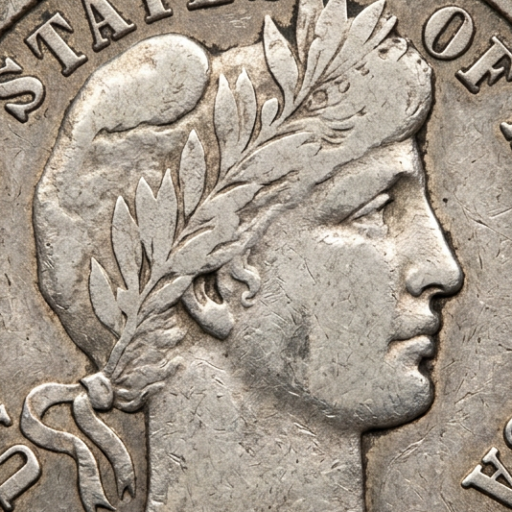
In 1892, the United States Mint introduced a new design for its silver coinage, replacing the long-running Seated Liberty motif. Designed by Chief Engraver Charles E. Barber, this new look featured a classical head of Liberty on the obverse and a powerful heraldic eagle on the reverse. While millions of these coins were eventually struck, the 1892-S produced at the San Francisco Mint remains one of the most elusive and sought-after dates in the entire collection.
If you have stumbled upon one of these in an old cigar box or a family inheritance, you should know that you are looking at a “key date” coin. Unlike the high-volume production seen at the Philadelphia Mint that year, San Francisco struck only 1,029,028 of these half dollars. Because many of these coins were used extensively in the booming economy of the American West, very few survived in pristine condition. To get an instant preliminary idea of what your specific specimen might be worth, you can use a top coin identifier app to analyze the surface details and mint mark.
When evaluating your coin, the “S” mint mark is the most crucial detail to locate. You will find it on the reverse side, directly below the eagle’s tail feathers and above the letters “HALF DOLLAR.” Finding that small “S” can mean the difference between a coin worth twenty dollars and one worth hundreds or even thousands. Using modern tools like the CoinHix app can help you zoom in on these tiny details to ensure you aren’t misidentifying a common Philadelphia issue.
Factors Determining the Value of Your 1892-S Silver Half Dollar
The market price for an 1892-S Barber Half Dollar is driven primarily by its “grade,” which refers to the amount of wear and tear the coin has sustained over the last 130 years. Because this was a workhorse coin in the late 19th century, most surviving examples are graded as “Good” or “Very Good.” In these conditions, the details of Liberty’s hair and the feathers on the eagle are mostly worn away, but the coin still carries a significant premium due to its low mintage.
If you are lucky enough to own a coin where the word “LIBERTY” on the headband is clearly visible, the value jumps significantly. Collectors categorize these as “Fine” or “Very Fine.” At this level, the 1892 Barber silver coin value begins to reach into the mid-hundreds. Coins that look almost like they just left the mint—showing original luster and no signs of wear—are exceptionally rare and are often sold at high-end auctions for Five-figure sums.
Beyond wear, “eye appeal” matters. A coin with dark, unattractive spotting may sell for less than one with a smooth, even grey patina. However, you must never attempt to clean your coin! Scrubbing a vintage silver half dollar with buffalo hide or chemicals will permanently damage its surface and can strip away 50% or more of its market value instantly. Instead, use the CoinHix app to take a high-resolution photo and compare it to known graded examples to see where yours fits on the scale.
1892-S Barber Half Dollar Price Chart
To help you understand the current market landscape, we have compiled a price guide based on recent auction data and dealer sales. Please note that prices fluctuate based on silver spot prices and collector demand.
| Condition / Grade | Estimated Value |
|---|---|
| Good (G-4) | $145 – $175 |
| Very Good (VG-8) | $210 – $260 |
| Fine (F-12) | $400 – $475 |
| Extremely Fine (EF-40) | $1,050 – $1,300 |
| About Uncirculated (AU-50) | $2,500 – $3,200 |
| Mint State (MS-63) | $12,000 – $16,500 |
Identifying Rare Varieties and Mint Marks
While the 1892-S is the star of the show for the San Francisco mint that year, it is important to distinguish it from its siblings struck in Philadelphia (no mint mark) and New Orleans (O mint mark). The Philadelphia version is quite common and usually sells for about $20 to $50 in circulated condition. The New Orleans version is also valuable, but the “S” mark from San Francisco generally commands the highest starting price for low-grade specimens.
One reason the 1892-S is so pricey is the “survival rate.” In the 1890s, San Francisco was the gateway to the West, and coins saw heavy circulation in mining camps and growing cities. They weren’t saved as souvenirs like the Philadelphia coins were. When you find an 1892-S, you are holding a piece of California gold-rush era history. To ensure you’re looking at an authentic mint mark and not a clever counterfeit, tools like CoinHix use AI to verify the placement and style of the “S” against official master dies.
Professional grading by services like PCGS or NGC is highly recommended if your coin appears to be in “Fine” condition or better. A certified grade provides a “pedigree” for the coin, making it much easier to sell to a reputable dealer or at an auction house. Without professional authentication, buyers may be hesitant to pay the full market value listed in our price chart above.
Collecting the Barber Half Dollar Series
The Barber Half Dollar series is a favorite among “type set” collectors—people who want one good example of every major American coin design. Because 1892 was the inaugural year, the demand for this specific date is always higher than for mid-series years like 1904 or 1908. It represents the transition of the U.S. Mint into a more modern aesthetic, reflecting the Gilded Age of American history.
For a casual collector, finding an 1892-S is often the “anchor” of a collection. If you enjoy the thrill of the hunt, checking through old silver jars or visiting local estate sales can occasionally yield these treasures. The Barber series is made of 90% silver and 10% copper, giving it a distinct heavy feel and a “ring” when tapped that modern clad coins simply don’t have.
Whether you intend to sell your coin today or keep it as a family heirloom, understanding its place in history adds to its value. The 1892-S is more than just fifty cents; it is a precious metal artifact from a time when the San Francisco Mint helped build the American economy. Keep your coin in a protective flip or capsule to prevent further wear, and always stay updated on current price trends through reliable grading apps and community forums.
Frequently Asked Questions
Q: Where is the mint mark on an 1892-S Barber Half Dollar?
A: The “S” mint mark is located on the reverse (back) of the coin. Look at the bottom of the coin, directly above the “D” in the word “DOLLAR” and below the eagle’s tail feathers. If there is no letter there, it was minted in Philadelphia.
Q: Is the 1892-S Barber Half Dollar made of real silver?
A: Yes, all Barber Half Dollars minted between 1892 and 1915 are composed of 90% silver and 10% copper. This gives them an intrinsic “melt value,” though the 1892-S is worth far more as a collectible than just for its metal content.
Q: How can I tell if my 1892-S coin is a fake?
A: Counterfeits often have “mushy” details or the wrong weight. A real 1892-S should weigh 12.5 grams. If you are unsure, use a digital scale or a high-quality identification app to compare your coin’s dimensions and features to an authentic specimen.
Q: Why is the San Francisco mint mark so much more valuable than the others?
A: The San Francisco Mint had a lower mintage of half dollars in 1892 compared to Philadelphia. Additionally, coins in the West were circulated more heavily, meaning fewer high-quality examples survived into the 21st century, creating a high-demand, low-supply scenario.