
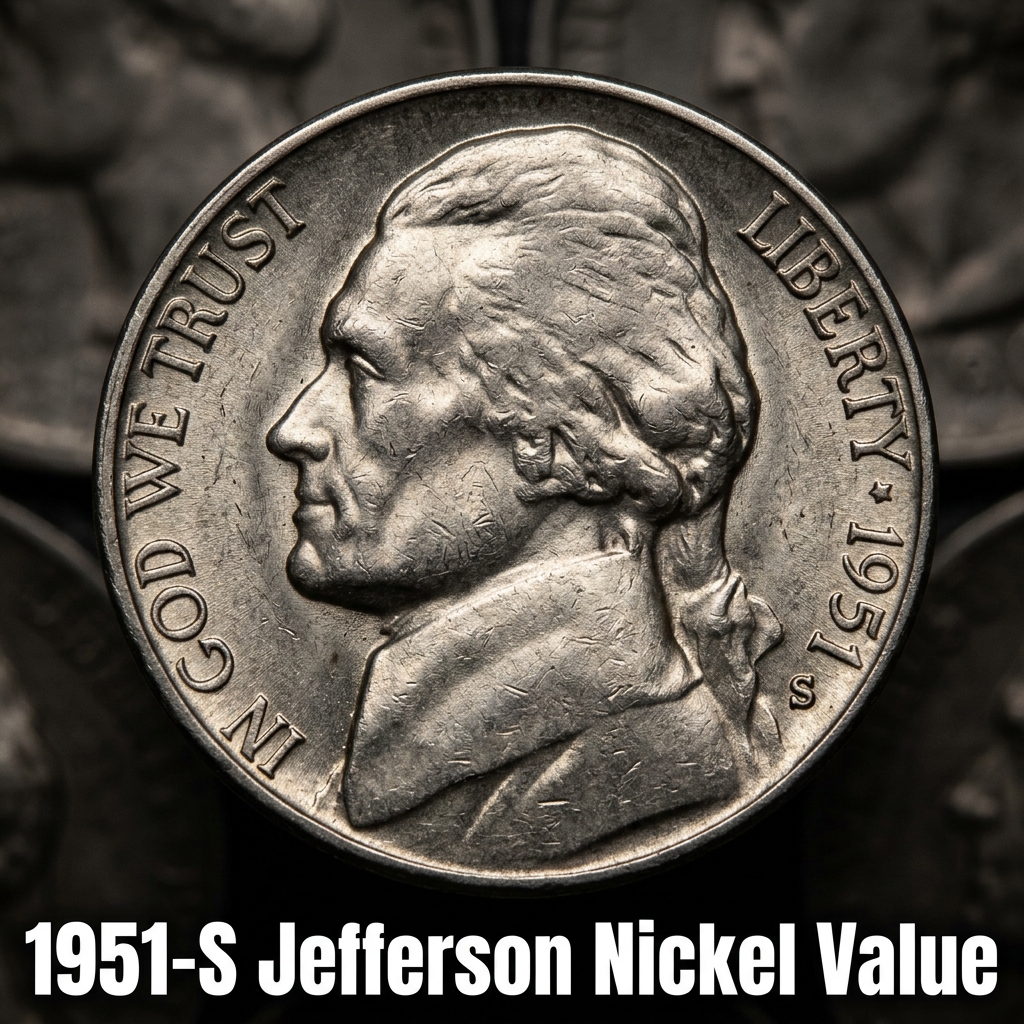
The 1951-S Jefferson Nickel is worth anywhere from $0.50 in worn condition to over $350 in high-grade mint state with Full Steps. This vintage coin, minted in San Francisco, is a common find in old jars but holds significant potential value for those who know what to look for on the reverse.
Identifying Your 1951-S Jefferson Nickel and Its Basic Worth
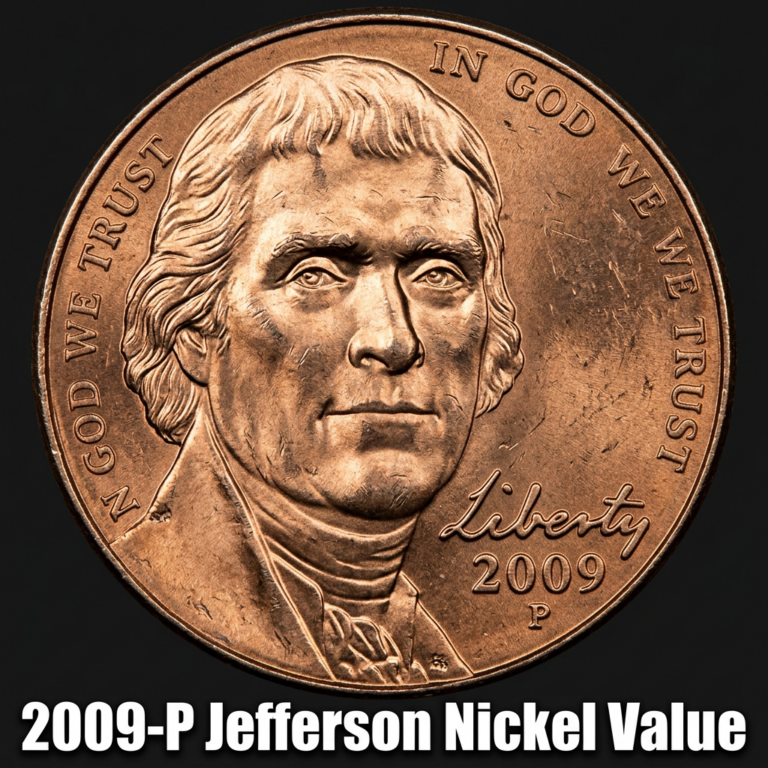
If you just found a 1951 nickel in your pocket change, the first thing you need to check is the mint mark. Unlike modern nickels where the mint mark is on the obverse, 1951 nickels feature the mark on the reverse, next to Monticello. The “S” signifies it was struck at the legendary San Francisco Mint. During this year, the San Francisco facility produced just over 7 million units, which is significantly lower than the Philadelphia or Denver outputs. To get an instant valuation of your collection, many hobbyists use a top coin identifier app to distinguish between common circulated strikes and rare varieties.
Most 1951-S nickels found in “average” condition—meaning they have been used in commerce for decades—are generally worth between 50 cents and a dollar. While this isn’t a life-changing amount, it is still ten to twenty times the face value. If you find a coin that looks like it just came from the bank in 1951, showing no scratches and a bright luster, the price can jump into the double or even triple digits. Using the CoinHix app can help you organize these finds and track how their market prices fluctuate over time.
How the Condition and Coin Grade Influence the Price
In the world of coin collecting, “Grade” is everything. For the 1951-S Jefferson Nickel, the difference between a coin graded MS60 (Uncirculated) and MS66 (Gem Quality) can be hundreds of dollars. Collectors are particularly interested in “Mint State” coins that have preserved their original frosty appearance. Because the 1951-S was often struck with slightly worn dies, finding a crisp, sharp image of Thomas Jefferson and his home, Monticello, is a challenge for many enthusiasts.
When you analyze your coin, look at the highest points of the design: Jefferson’s cheekbone and the pillars of Monticello. If these areas are smooth or shiny, the coin is “Circulated.” If the original texture remains, you likely have an “Uncirculated” specimen. You can find detailed breakdowns of 1951-S nickel mint state prices by looking at recent auction records. Professional grading services like PCGS or NGC provide the final word on grade, but tools like CoinHix allow you to get a highly accurate estimate before spending money on professional certification.
The Holy Grail of Jefferson Nickels The Full Steps Designation
For the serious 1951-S Jefferson Nickel collector, the “Full Steps” (FS) designation is the gold standard. On the reverse of the coin, Monticello has a set of steps. In early 1950s San Francisco strikes, the dies often didn’t press deep enough to clearly define all five or six steps. Most nickels from this era show the steps as a blurry or flat rectangle. However, if your coin has five or six distinct, uninterrupted lines representing the steps, its value skyrockets.
A 1951-S Jefferson Nickel with the Full Steps designation is incredibly rare. While a standard high-grade MS66 might sell for $50, an MS66 FS (Full Steps) version can easily fetch $500 to $1,000 at a high-end auction. This is because fewer than 1% of the surviving population meets this strict criteria. To see how these physical characteristics impact the final market price, you should check the latest 1951-S Jefferson nickel value data online. It is always worth grabbing a magnifying glass to check those tiny steps on the back of the coin.
Current Market Value Comparison Table
To help you understand what your coin might be worth today, we have compiled a price guide based on the most common grades. Note that these prices represent retail values for coins without major damage or cleaning.
| Condition / Grade | Estimated Value (USD) |
|---|---|
| Good (G-4) to Very Good (VG-8) | $0.45 – $0.75 |
| Fine (F-12) to Very Fine (VF-20) | $0.85 – $1.50 |
| Extremely Fine (EF-40) | $2.00 – $4.00 |
| About Uncirculated (AU-50) | $5.00 – $12.00 |
| Mint State (MS-63) | $25.00 – $45.00 |
| Mint State (MS-66) | $120.00 – $350.00 |
| Mint State (MS-66 Full Steps) | $650.00+ |
Key Errors and Varieties to Watch For
Aside from condition, collectors look for “Errors” that occurred during the minting process. While the 1951-S isn’t famous for a major “doubled die” like some other years, you can still find minor “Repunched Mint Marks” (RPM). This occurs when the “S” was punched into the die twice, creating a slightly shadowed or ghosting effect on the letter. These varieties often command a premium from specialist collectors.
Other common errors include “Die Cracks,” which look like raised lightning bolts across the coin’s surface, or “Off-Center Strikes,” where the design is pushed toward one edge. If you find a coin that looks “weird” or has an extra lump of metal, don’t clean it! Cleaning a coin with chemicals or a cloth can actually destroy its value. Instead, use the CoinHix app to get a professional-style analysis of the error and see if it’s a recognized variety in the numismatic community.
Frequently Asked Questions
Q: Where is the mint mark on a 1951 nickel?
A: The mint mark on a 1951 nickel is located on the reverse side (the side with the building). Look to the right of the Monticello building, between the building and the rim. If you see an “S”, it was made in San Francisco. A “D” means Denver, and no mark means it was made in Philadelphia.
Q: Is a 1951-S nickel made of silver?
A: No, Jefferson Nickels were only made of silver during the “War Years” (1942-1945). The 1951-S nickel is composed of 75% copper and 25% nickel. It does not have any “melt value” for precious metals, so its worth is strictly based on its rarity and condition.
Q: Should I clean my 1951-S Jefferson nickel to make it look new?
A: Absolutely not. Cleaning a coin with soap, vinegar, or metal polish creates tiny micro-scratches that collectors can see under a microscope. A cleaned coin is often worth significantly less than an uncleaned one, even if the uncleaned one looks “dirty.”
Q: Why is the 1951-S worth more than the 1951 Philadelphia nickel?
A: Value is driven by supply and demand. The Philadelphia Mint produced nearly 29 million nickels in 1951, while the San Francisco Mint produced only about 7.7 million. Because there are fewer “S” nickels to go around, collectors are willing to pay a higher premium for them.