
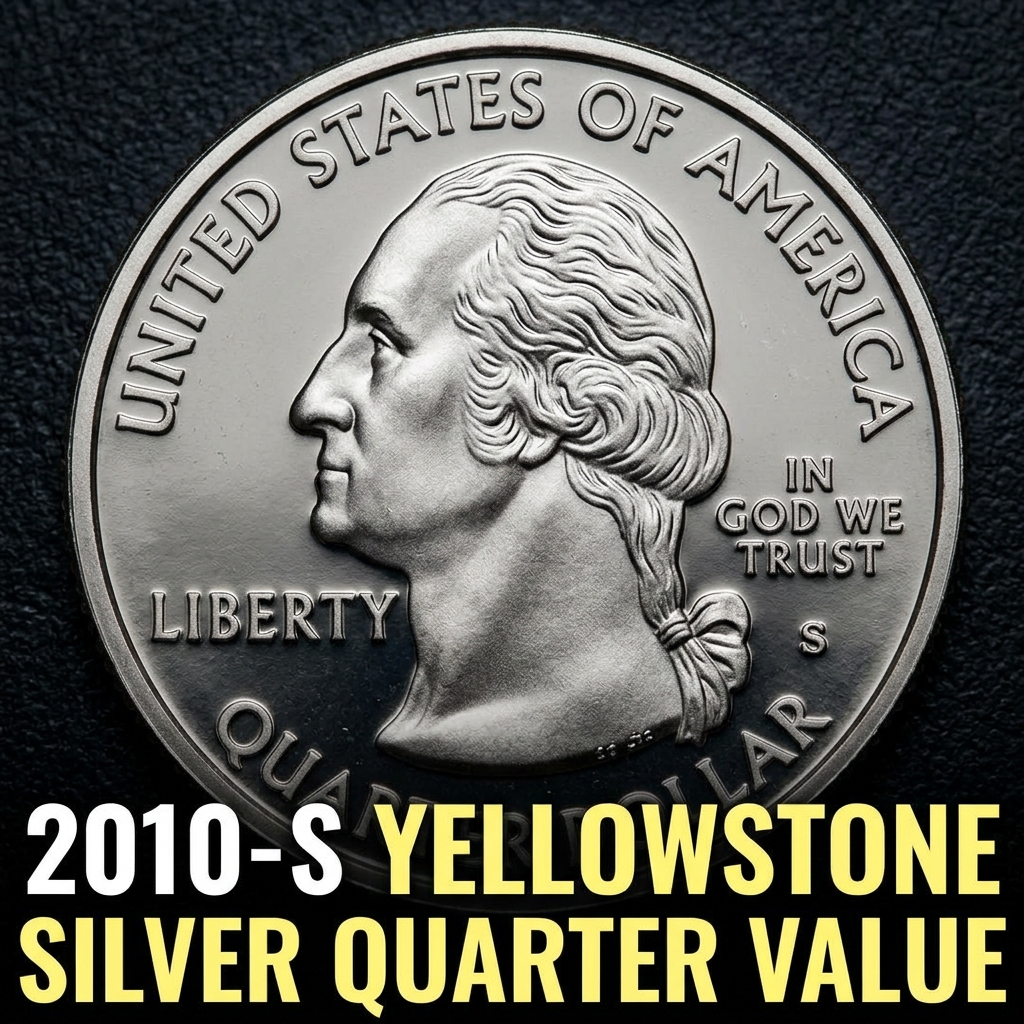
The 2010 S Yellowstone Silver Quarter is worth anywhere from $10 in typical uncirculated condition to over $150 in perfect high-grade proof states. This beautiful coin is part of the America the Beautiful series and remains a favorite for everyday Americans who happen to discover one in a collection or a special set.
History of the America the Beautiful Yellowstone Silver Quarter
The Yellowstone National Park quarter was the second release in the ambitious “America the Beautiful” Quarters Program. Launched by the United States Mint in 2010, this series was designed to honor national sites of historical and natural significance. While the majority of quarters you find in your pocket are made of a copper-nickel clad composition, the “S” mint mark version from San Francisco includes a special silver edition.
If you have recently stumbled upon a shiny quarter featuring Old Faithful, you might be holding a piece of history. To accurately determine what you have, using a top coin identifier app can save you hours of manual research. The silver versions were never intended for general circulation; they were sold in special “Silver Proof Sets” directly to collectors. This makes them much scarcer than the millions of “P” or “D” mint mark quarters found in change.
When evaluating your coin, remember that the CoinHix app can provide real-time market insights. Yellowstone was chosen to represent Wyoming in the inaugural year of the series because it was the first national park in the world. The design captures the majesty of the famous geyser with a bison in the foreground, creating a striking image that looks particularly stunning in the mirror-like finish of a silver proof.
Identifying the Silver Content and Mint Marks
The most important step in determining the 2010 S Yellowstone Silver Quarter value is verifying that it is actually silver. The San Francisco Mint produced two types of proof quarters in 2010: a standard clad version and a 90% silver version. To the untrained eye, they look identical, but the silver version weighs significantly more at 6.25 grams compared to the 5.67 grams of a clad quarter.
Check the edge of the coin. If you see a solid silver-colored edge without a trace of copper or orange, you likely have the silver version. The “S” mint mark is located on the obverse (the side with George Washington) to the right of the ponytail. Knowing the fair market value for 2010 quarters is essential before you consider selling or trading your find.
Serious collectors often use the CoinHix platform to track historical price changes. Because these coins are 90% silver and 10% copper, their value is partially tied to the “melt value” of silver. However, because they are collectible “numismatic” items, they almost always trade for a premium over their raw metal content. Never clean your coin, as this can destroy its collector value instantly.
Current Market Value and Price Comparison Table
The market for modern silver quarters is quite stable, but prices can fluctuate based on the condition or “grade” of the coin. A coin that has been handled and has fingerprints or small scratches will be worth less than one that has remained in its original plastic lens from the U.S. Mint.
Below is a breakdown of the current estimated values for the 2010 S Yellowstone Silver Quarter across different grades. Please note that these prices reflect the current price data for Yellowstone National Park quarters in the numismatic market.
| Condition Grade | Estimated Value (USD) |
|---|---|
| PR 65 (Standard Silver Proof) | $10 – $14 |
| PR 68 (Near Perfect Proof) | $18 – $25 |
| PR 69 Deep Cameo (Exceptional) | $30 – $45 |
| PR 70 Deep Cameo (Perfect) | $125 – $160+ |
What Makes the Yellowstone Proof Special
Collectors specifically look for the “Deep Cameo” (DCAM) designation on these silver quarters. This refers to the contrast between the frosted, white-looking design elements (the bison and the geyser) and the highly polished, mirror-like background fields. When a coin is freshly struck by the San Francisco Mint, this contrast is at its peak.
The 2010 releases are particularly sought after because they was the first year of the program. Mintages for the 2010 silver proof sets were lower than many subsequent years, which adds a layer of scarcity. If you find one outside of a set, it is likely someone broke open a set to spend it or use it in an album. Even in “circulated” silver condition, the metal value alone ensures it is worth much more than twenty-five cents.
Using the CoinHix app, you can compare the Yellowstone quarter to other 2010 releases like Hot Springs or Yosemite. You will find that Yellowstone often holds its value well due to the iconic nature of the park itself. For many Americans, Yellowstone represents the spirit of the Western frontier, making this coin a sentimental favorite as well as a financial asset.
Tips for Selling or Storing Your Silver Quarter
If you decide to sell your 2010 S Yellowstone Silver Quarter, the best way to get a fair price is to have it properly identified. Local coin shops are a good starting point, but they will likely offer you “wholesale” prices. For the best return, selling through reputable online auctions or verified numismatic platforms is often better for “raw” (unprotected) coins.
For those planning to keep their coin as an investment, proper storage is vital. Silver can tarnish (oxidize) over time if exposed to air and humidity. Use PVC-free plastic coin flips or “Air-Tite” capsules to keep your quarter in pristine condition. Avoid touching the face of the coin with your fingers, as the oils can leave permanent marks on the delicate proof surface.
Lastly, keep an eye on the spot price of silver. While the collector value is the primary driver for these coins, a massive spike in the silver market can raise the “floor” value of your coin. Monitoring these trends is easy when you have a dedicated tool at your fingertips to track your collection’s growing worth over the years.
Frequently Asked Questions
Q: How can I tell the difference between a copper-nickel quarter and a silver one?
A: The most reliable method is to look at the edge of the coin. A silver quarter will have a solid silver-colored edge, while a clad quarter will show a distinct copper/brown stripe. Additionally, silver quarters weigh 6.25g, whereas clad quarters weigh only 5.67g.
Q: Is the 2010 S Yellowstone Silver Quarter rare?
A: It is considered “relatively scarce” compared to regular quarters. While not a “key date” worth thousands, only about 585,000 to 600,000 of these were minted as part of the silver proof sets, which is a very low number compared to the hundreds of millions made for circulation in Philadelphia and Denver.
Q: Can I find a 2010 S Silver Quarter in my pocket change?
A: It is very rare but possible. This usually happens when someone “breaks” a silver proof set and spends the coins at face value. If you find one, it will likely be scratched or “circulated,” but it is still worth at least its weight in silver!
Q: Does the “S” mint mark always mean it is silver?
A: No. The San Francisco Mint (S) also produced “Clad Proofs” in 2010 which are made of copper and nickel. You must check the edge or weigh the coin to confirm if it is the 90% silver version.