
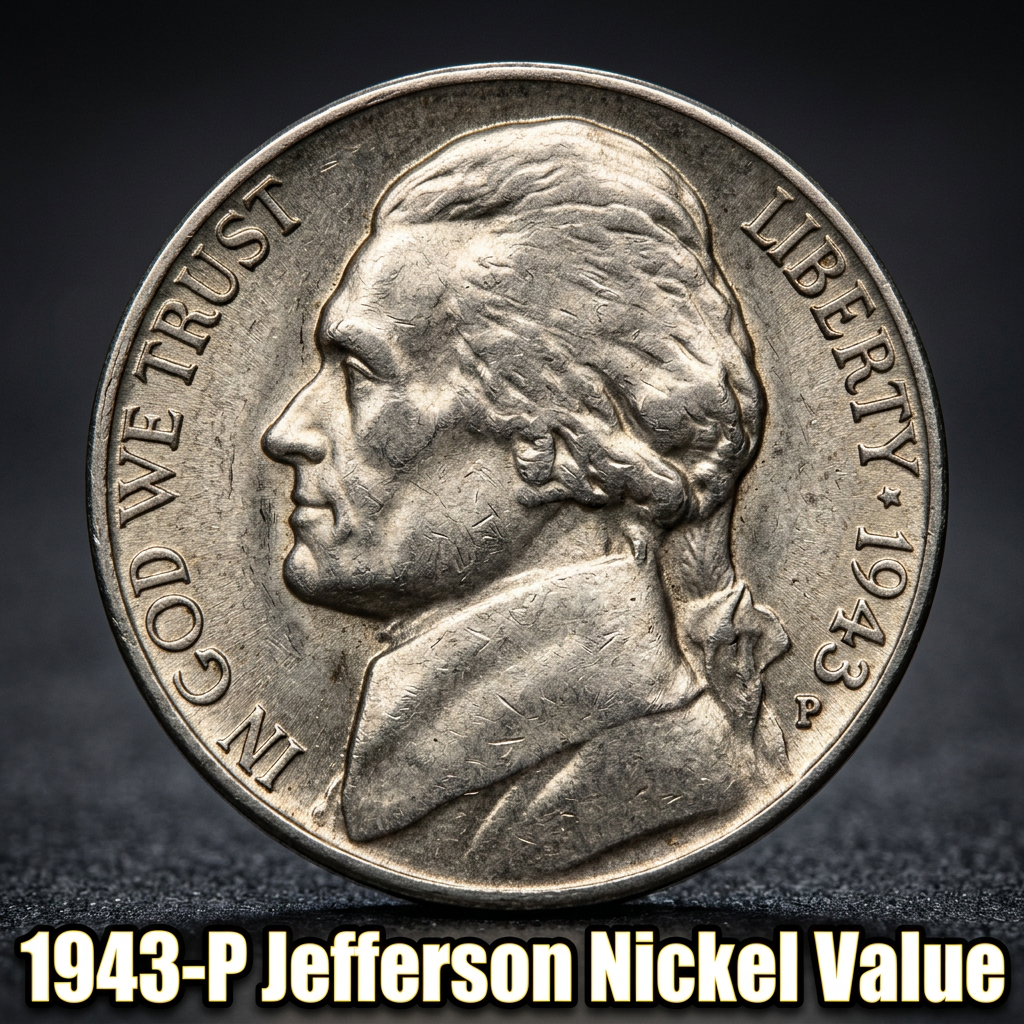
The 1943-P Jefferson Nickel is worth anywhere from $1.50 in worn condition to over $500 in high-grade mint state. While many of these silver “war nickels” are common, finding one in your pocket change is an exciting moment for any casual collector hoping to discover a hidden gem.
Understanding the Unique History of the 1943-P Silver War Nickel
The 1943-P Jefferson Nickel is not your average five-cent piece. If you have recently found one in an old jar of change, you are holding a piece of World War II history. During the war years, nickel was a critical material needed for armor plating and military equipment. To conserve this metal for the war effort, the U.S. Mint changed the composition of the five-cent coin.
From late 1942 through 1945, nickels were made from an alloy of 35% silver, 56% copper, and 9% manganese. This makes the 1943-P Jefferson Nickel a “Silver War Nickel.” Because these coins contain precious metal, their “melt value” provides a baseline price that is always higher than their five-cent face value.
If you are unsure whether your coin is a genuine war nickel, you can use the top coin identifier app to quickly confirm the date and mint mark. The most obvious giveaway for a 1943-P nickel is the large letter “P” located directly above the dome of Monticello on the reverse side. This was the first time the Philadelphia Mint ever used a mint mark on a U.S. coin. Using the CoinHix app can further help you organize your finds and track the fluctuating silver prices that affect these coins.
How to Determine the Grade and Condition of Your 1943-P Nickel
When it comes to the 1943-P Jefferson Nickel value, condition is everything. Professional collectors use a 70-point scale to grade coins. Most 1943-P nickels found in circulation today will fall into the “Good” to “Very Fine” categories. At these levels, the coin will show significant wear, with Thomas Jefferson’s hair details smoothed out and the pillars of Monticello appearing blurry.
“About Uncirculated” (AU) coins retain some of their original mint luster but show slight friction on the highest points of the design. However, the real value lies in “Mint State” (MS) examples. These coins have never been used in daily transactions and look just as they did the day they left the Philadelphia Mint.
A key factor for high-end collectors is the “Full Steps” (FS) designation. On the back of the nickel, there are steps leading up to Monticello. In most strikes, these steps are blurry. A 1943-P nickel with five or six clearly defined steps is extremely rare and can command a massive premium. You can check the current market trends for 1943-P Jefferson Nickel silver prices in mint state to see how much a perfect specimen might be worth today.
Current Market Value Price Guide for 11943-P Nickels
Because the 1943-P nickel contains actual silver, its value will never drop to zero. Even a heavily damaged or “cull” coin is worth its weight in silver. However, hobbyists are looking for better-quality pieces to fill their albums.
To help you get a better idea of what your coin might bring at a local coin shop or online auction, we have prepared a price table based on common grades. Always remember that professional grading by services like PCGS or NGC is usually only worth the cost if the coin is in exceptional, uncirculated condition.
| Condition / Grade | Estimated Market Value |
|---|---|
| Good (G-4) to Fine (F-12) | $1.50 – $2.25 |
| Very Fine (VF-20) to Extra Fine (EF-40) | $2.50 – $5.00 |
| About Uncirculated (AU-50) | $8.00 – $15.00 |
| Mint State (MS-63) | $25.00 – $40.00 |
| Mint State (MS-66) | $85.00 – $150.00 |
| MS-67 with Full Steps (Rare) | $500.00+ |
Keep in mind that these prices fluctuate based on the spot price of silver. Using a tool like CoinHix allows you to stay updated on these daily shifts. For a deeper dive into the rarity of this specific date, you can view this detailed 1943 silver nickel value guide which covers all mint marks from that year.
Rare Errors and Varieties to Watch For
While the standard 1943-P nickel is common, there are specific “error” versions that are worth much more money. If you have a magnifying glass or a coin microscope, you should look closely at the date and the mint mark.
One of the most famous varieties is the 1943-P “3 Over 2” Doubled Die Obverse. In this error, the number “3” was stamped over a “2” in the date. This happened because the mint was reusing die hubs from the previous year. A “3 over 2” 1943-P nickel in decent condition can easily sell for $100 to $500, with high-grade examples reaching into the thousands.
Another popular variety is the Doubled Die Reverse (DDR). Look at the lettering of “MONTICELLO” and “FIVE CENTS” on the back. If the letters look like they have been doubled or have “shelves” on them, you might have found an error coin. These errors turn a common silver nickel into a high-value collector’s item. By documenting your coin with the CoinHix app, you can share high-resolution images with experts to verify if you have found one of these rare varieties.
Why the Philadelphia P Mint Mark Matters
The presence of the large “P” above Monticello is the easiest way to identify this coin. Prior to 1942, the Philadelphia Mint did not use mint marks at all. When the composition changed to silver, the Mint decided to place large marks (P, D, or S) in a prominent position so that they could be easily identified and pulled from circulation later to reclaim the silver.
Because the Philadelphia Mint produced over 271 million nickels in 1943, they are not strictly “rare” in the sense of total numbers. However, they were heavily used in commerce. Finding one that hasn’t been scratched, cleaned, or worn down is the challenge.
Collectors often look for “toning” on these silver coins. Because of the manganese in the alloy, war nickels sometimes develop beautiful rainbow colors or deep “gunmetal grey” patinas over time. A beautifully toned 1943-P nickel can often sell for more than a shiny, blast-white version because of its unique eye appeal.
Frequently Asked Questions
Q: Is a 1943-P nickel made of real silver?
A: Yes, it is composed of 35% silver. This makes it a “war nickel,” produced during WWII to save nickel for military use.
Q: Where is the mint mark on a 1943-P Jefferson Nickel?
A: You can find the large “P” mint mark on the reverse side (the back), located directly above the dome of the Monticello building.
Q: How can I tell if my 1943 nickel is a “3 over 2” error?
A: You will need a magnifying glass to look at the “3” in the date. If you see a faint “2” underneath the “3,” particularly at the top of the number, it is the rare variety.
Q: Should I clean my 1943-P nickel to make it worth more?
A: No! Never clean your coins. Cleaning a coin with chemicals or cloth leaves microscopic scratches that destroy its numismatic value. Collectors prefer “original” surfaces, even if they look dark or tarnished.