
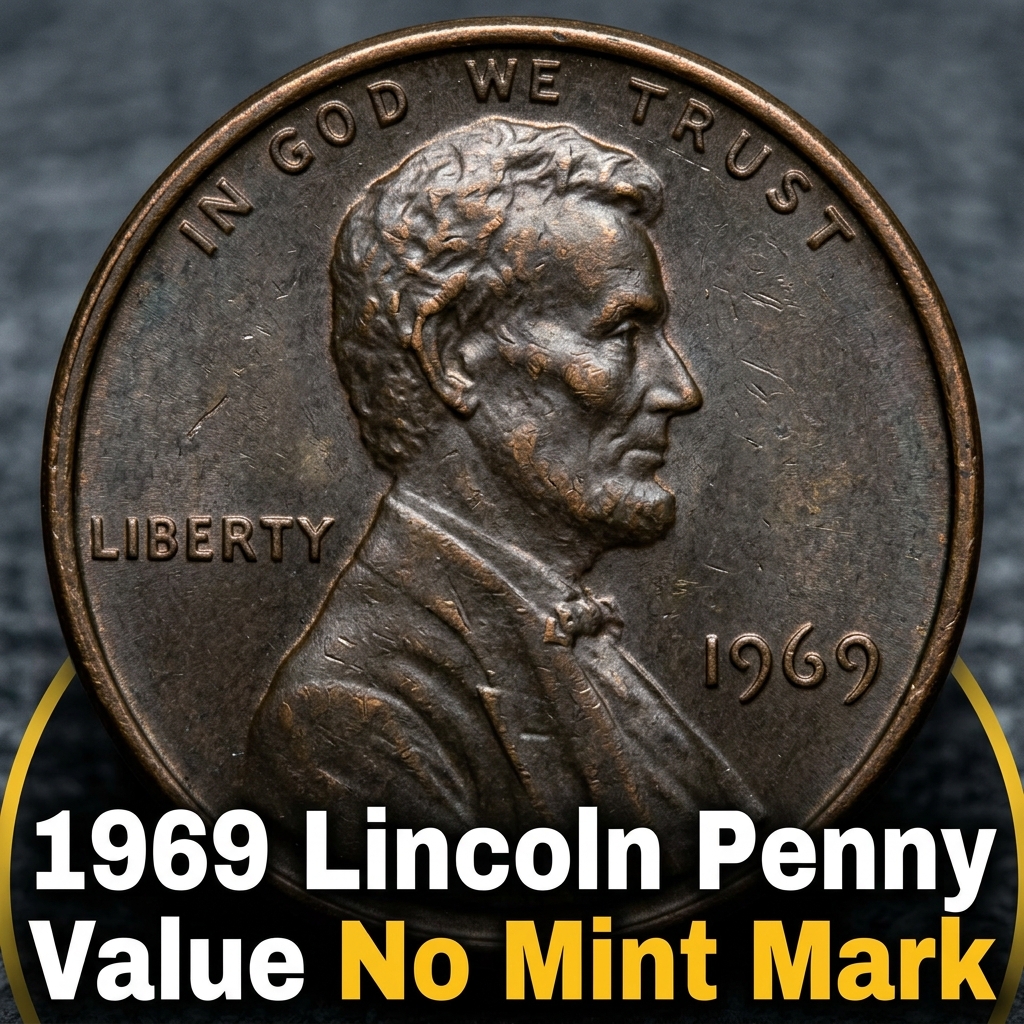
The 1969 Lincoln Penny No Mint Mark is worth anywhere from its face value of $0.01 in heavily circulated condition to over $150 in high-grade mint state. Finding one of these copper cents in your pocket change is an exciting moment for any collector or curious American looking to understand the hidden value in everyday coins.
Understanding the Philadelphia Mint 1969 Lincoln Penny
If you are looking at a 1969 penny and notice there is no small letter (mint mark) beneath the date, you have a coin struck at the Philadelphia Mint. During this era, the Philadelphia facility did not use a “P” mint mark on pennies, which is a common point of confusion for new hobbyists. Millions of these coins were released into circulation, meaning they are still quite easy to find in jars or old piggy banks today. While most of these coins are worth only a few cents due to their high production numbers, their copper content alone makes them more valuable than the zinc pennies produced today.
When you first find an old coin like this, the first step is identification. Many people use a top coin identifier app to quickly determine the origin and basic specs of their find. The 1969 no mint mark penny is composed of 95% copper and 5% zinc/tin, weighing approximately 3.11 grams. Because the price of copper fluctuates, even a worn 1969 penny is technically worth about 2 to 3 cents in melt value, though it is illegal to melt US currency for profit. Using the CoinHix app can help you track these small value fluctuations and keep a digital catalog of your collection.
How Grading Affects Your 1969 Penny Value
The difference between a penny worth one cent and a penny worth $100 comes down to “grade” or condition. Most 1969 pennies you find in your wallet are “Circulated,” meaning they have scratches, dullness, and worn-down features on Abraham Lincoln’s face. Collectors use a 70-point scale to determine value, where a grade of 1 is barely recognizable and 70 is perfect. For a 1969 penny with no mint mark to command a premium price, it must be in “Uncirculated” or “Mint State” (MS) condition, displaying the original red luster it had when it left the mint.
Professional grading services like PCGS or NGC categorize these coins by color: Red (RD), Red-Brown (RB), and Brown (BN). A “Red” 1969 penny is the most desirable because it lacks the oxidation that turns copper brown over time. If you think you have a pristine, shiny specimen, checking the 1969 penny value charts can give you a better idea of what “Mint State” coins are currently selling for at auction. High-grade examples at MS66 or MS67 are rare and can fetch significant sums from specialized collectors.
Value Chart for 1969 Lincoln Cent No Mint Mark
To help you understand what your coin might be worth based on its condition, refer to the price guide below. Please keep in mind that these prices represent retail market averages for the Philadelphia strike (No Mint Mark).
| Condition / Grade | Estimated Value (USD) |
|---|---|
| Circulated (Good to About Uncirculated) | $0.02 – $0.15 |
| Uncirculated (MS60 – MS63) | $1.00 – $5.00 |
| Choice Uncirculated (MS65 Red) | $15.00 – $30.00 |
| Superb Gem (MS67 Red) | $150.00 – $350.00+ |
What About the Famous 1969-S Doubled Die Error
While the no-mint-mark penny is a stable part of many collections, many people searching for 1969 pennies are actually hoping to find the legendary “1969-S Doubled Die Obverse” (DDO). This is one of the most famous error coins in American history. It features very clear, thick doubling on the date “1969” and the words “LIBERTY” and “IN GOD WE TRUST.” However, this error only occurs on coins with the “S” mint mark (San Francisco), not the Philadelphia “no mint mark” versions.
If you are examining a 1969 penny and see what looks like double lines but the coin has no mint mark, you are likely looking at “machine doubling” or “strike doubling.” This is a common manufacturing flaw that does not add significant value. For those lucky enough to find a genuine “S” mint mark error, the 1969-S Doubled Die Penny auction records show that these coins can sell for tens of thousands of dollars. Always use a magnifying glass to check for the distinct, clear separation of digits that characterizes a true doubled die.
Collecting 1969 Pennies and Using CoinHix
Starting a coin collection doesn’t require a fortune. Many people begin by simply separating any penny dated 1982 or earlier, as these are the copper varieties. A 1969 no mint mark penny is a great “year set” filler. If you have a large jar of coins, sorting through them can be a relaxing hobby that occasionally pays off with a rare find. To make the process smoother, many modern collectors rely on tools like CoinHix to identify dates and mint marks that might be too small to see clearly with the naked eye.
When storing your 1969 pennies, keep them in a cool, dry place. Moisture is the enemy of copper, causing “bronze disease” or green spots that destroy the coin’s value. Using acid-free flips or tubes will ensure that if you do find an MS65 Red specimen, it stays that way for years to come. Whether you’re a casual hunter or an aspiring numismatist, the 1969 Philadelphia penny is a classic piece of American history that reminds us to always check our change. Knowing how to use official resources and the CoinHix platform ensures you never accidentally spend a small fortune.
Frequently Asked Questions
Q: Is a 1969 penny with no mint mark rare?
A: No, the 1969 penny without a mint mark is very common. The Philadelphia Mint produced over 1.1 billion of these coins. They are only considered rare if they are in “perfect” uncirculated condition (MS67 or higher).
Q: How can I tell if my 1969 penny is copper or zinc?
A: All pennies minted in 1969 are made of a copper alloy. The US Mint did not switch to the copper-plated zinc composition until 1982. You can verify this by weighing the coin; a 1969 penny should weigh approximately 3.11 grams.
Q: What is the most expensive 1969 penny ever sold?
A: While the standard 1969 no mint mark penny sells for a few hundred dollars in top grades, the 1969-S (San Francisco) Doubled Die error has sold for over $120,000 at auction.
Q: Why is there no “P” on my 1969 penny?
A: Historically, the Philadelphia Mint did not put a mint mark on Lincoln Pennies. The lack of a mark simply indicates it was made in Philadelphia. The “P” mint mark only appeared briefly on pennies in 2017 to celebrate the mint’s 225th anniversary.