
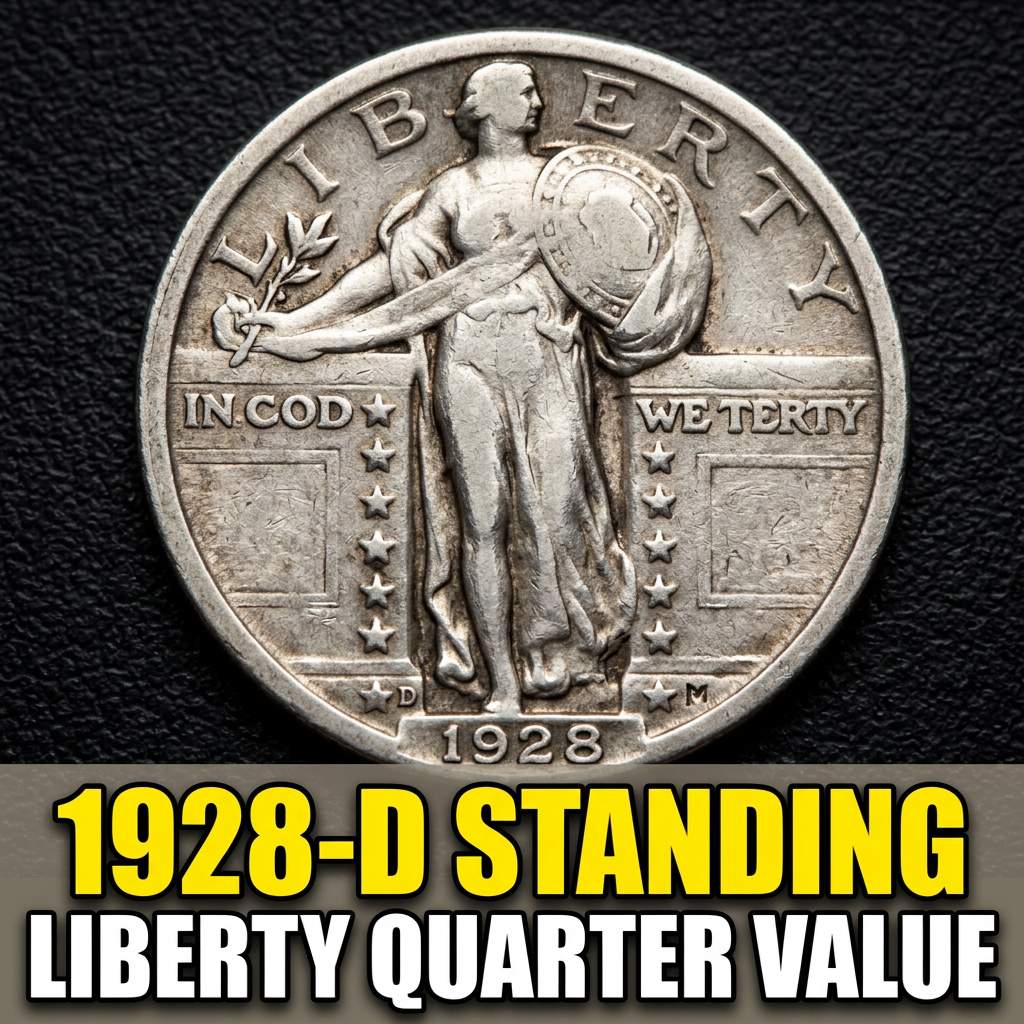
The 1928-D Standing Liberty Quarter is worth anywhere from $10 in heavily worn condition to over $350 in high-grade uncirculated state. If you have found one of these beautiful vintage coins in a jar or a collection, you are holding a piece of American history from the late Roaring Twenties.
Determining the Market Value of Your 1928-D Quarter
The value of a 1928-D Standing Liberty Quarter depends almost entirely on its physical condition and the clarity of its details. Because these coins were made of 90% silver, they have a “melt value” that provides a minimum price floor, but their numismatic or collector value is usually much higher. If you are struggling to identify the specific grade of your coin, using a top coin identifier app can help you zoom in on key features like Liberty’s shield or the rivets on her armor.
Most 1928-D quarters found in circulation today fall into the “Good” to “Fine” categories. In these states, you can expect a value between $12 and $25. However, if the coin has a crisp date and visible feathers on the eagle’s breast, the price jumps significantly. Collectors are always on the lookout for specimens that haven’t been cleaned, as original toning can actually add to the appeal. If you want to get a quick estimate, the CoinHix app is a great tool for casual hunters to compare their finds against known auction records.
Specific Price Points for Different Coin Grades
When we talk about “D” on this coin, we are referring to the Denver Mint. The “D” mint mark is located just to the left of the date on the bottom of the obverse side. The 1928 Denver mintage was relatively low compared to the Philadelphia mint of the same year, making it a bit more desirable for hobbyists. To help you understand the current market, we have compiled a price guide based on recent sales data.
For those looking for the most accurate and up-to-date figures, checking the 1928-D Standing Liberty Quarter auction prices is the best way to see what buyers are actually paying in real-time.
| Condition / Grade | Estimated Value |
|---|---|
| Good (G-4) | $10 – $12 |
| Very Fine (VF-20) | $25 – $35 |
| Extremely Fine (EF-40) | $65 – $85 |
| About Uncirculated (AU-50) | $110 – $140 |
| Mint State (MS-63) | $250 – $350 |
| Mint State (MS-65 Full Head) | $1,200+ |
The Importance of the Full Head Designation
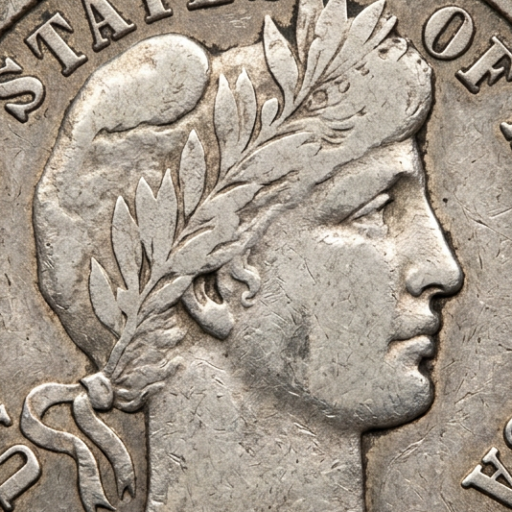
Among Standing Liberty Quarter enthusiasts, there is a special designation called “Full Head” (FH). This refers to a coin where the details of Liberty’s helmet and hair are completely struck and visible. Because the dies used in 1928 often resulted in a “soft” strike, coins with a Full Head are incredibly rare and command a massive premium. Even a standard uncirculated 1928-D might be worth $300, but if it earns the FH designation from a grading service, that value could triple or quadruple.
If you believe your coin is in pristine condition, it is vital to research the 1928-D Standing Liberty Quarter rarity and grading details before taking it to a dealer. Knowing the difference between a common specimen and a “Full Head” rarity can mean the difference of hundreds of dollars in your pocket. Using the CoinHix app can help you identify these subtle strike characteristics through high-resolution image comparisons.
How to Identify a Genuine 1928 Denver Quarter
To the untrained eye, many elderly quarters look the same. However, the Standing Liberty design, created by Hermon Atkins MacNeil, is distinct. It features Lady Liberty walking through a gateway between two walls. On the reverse, an eagle is shown in flight. The “D” for Denver is a small letter located right above the date, between the star and the gate.
Beware of coins that look “too shiny.” Many people mistakenly clean their old coins with polish or baking soda, thinking it increases the value. In reality, cleaning a coin removes the original mint luster and creates microscopic scratches, which can destroy up to 90% of its collector value. If you find a 1928-D quarter, leave it in its original state and use the CoinHix app to snap a photo for an initial evaluation.
Historical Significance of the Standing Liberty Series
The Standing Liberty series ran from 1916 to 1930, making the 1928-D one of the final years of the design. This era was transitional for the United States Mint as they struggled with the complexity of MacNeil’s design. By 1928, the Mint had already modified the design to “recess” the date, preventing it from wearing off as quickly as it did on the 1916 and 1917 versions.
This historical context makes the 1928-D a favorite for those building a “date and mint” set. It represents the height of the 1920s economy just before the Great Depression hit in 1929. Owning one is like holding a silver souvenir from the last gasp of the Roaring Twenties. Because they were minted in 90% silver, they also serve as a great hedge against inflation for casual savers.
Frequently Asked Questions
Where is the mint mark on a 1928 quarter?
A: The mint mark is located on the front (obverse) of the coin. Look just to the left of the date at the bottom. You will see a small “D” for Denver or “S” for San Francisco. If there is no letter, it was minted in Philadelphia.
Is the 1928-D Standing Liberty Quarter made of silver?
A: Yes, all Standing Liberty Quarters minted between 1916 and 1930 are composed of 90% silver and 10% copper. This gives the coin intrinsic value regardless of its condition.
What makes a 1928-D quarter “Full Head”?
A: A “Full Head” (FH) designation is given to coins where the helmet’s ear hole is distinct, the hairline is clear, and the three leaves on the helmet are visible. This indicates a perfect, sharp strike from the minting press.
How much is a 1928-D quarter worth if it’s heavily worn?
A: Even if the coin is very worn and “flat,” it is still worth at least its silver melt value, which is usually around $5-$6 depending on the current market price of silver. However, most 1928-D quarters still fetch a collector premium of $10 to $12.