
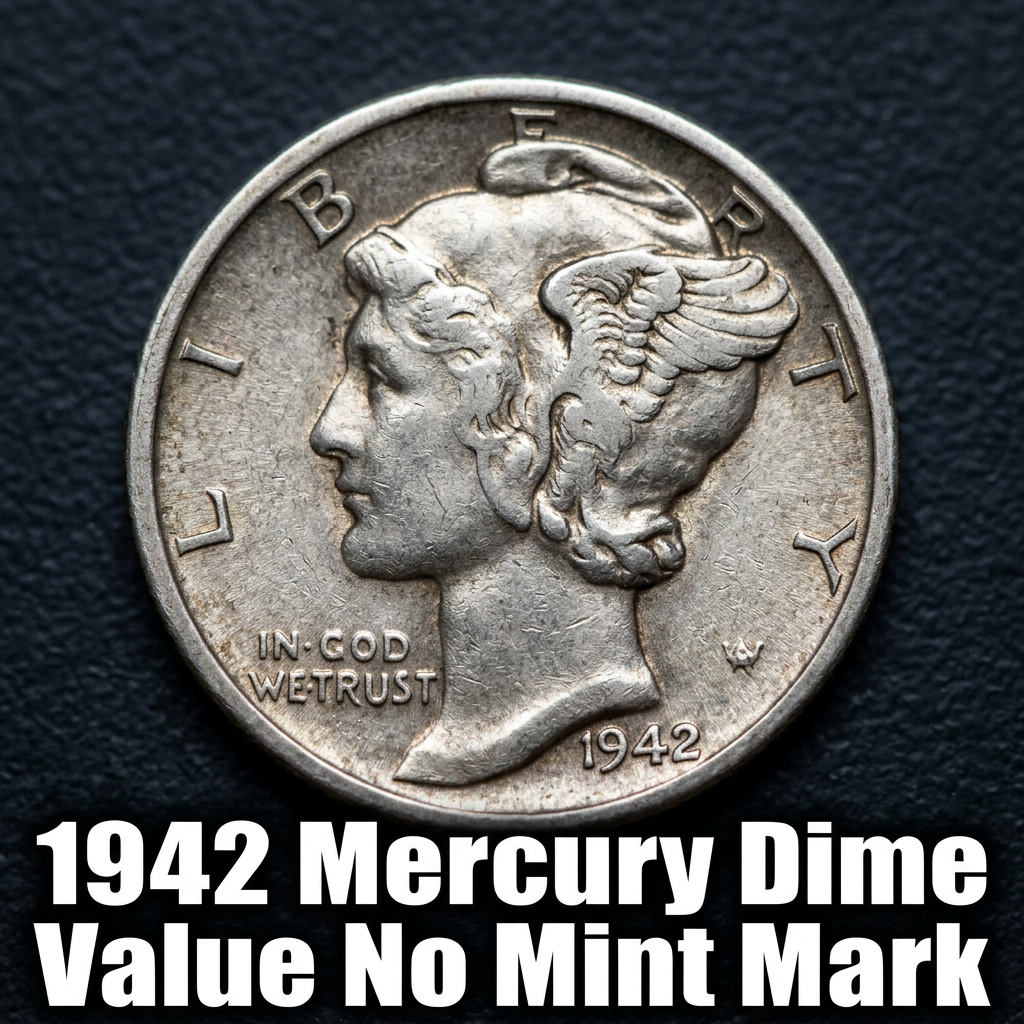
The 1942 Mercury Dime is worth anywhere from $2.50 in worn condition to over $500 in high-grade uncirculated states. This elegant silver coin is a favorite among casual collectors and people who stumble upon old change in their attic or inherited collections.
Understanding the Philadelphia Mint 1942 Mercury Dime
If you are looking at a 1942 dime and cannot find a small letter “S” or “D” on the back, you have a coin minted in Philadelphia. Back in the 1940s, the Philadelphia Mint did not use a mint mark for its dimes. While millions were produced, their silver content alone makes them worth much more than their face value today.
To get an instant estimate of what your specific coin might be worth, you can use a top coin identifier app to scan the details of Lady Liberty’s “Winged Head” design. Many everyday Americans are surprised to find that a common-looking dime is actually a piece of history valued at fifteen or twenty times its original worth just for the metal content.
When you use an app like CoinHix, you can quickly determine if the wear and tear on your coin is significant. Collectors look for specific details in the hair of Liberty and the feathers on her cap. The better the detail, the higher the price you can command at an auction or a local coin shop.
Detailed Price Guide for 1942 No Mint Mark Dimes
The value of a 1942 Mercury Dime is determined largely by its “Grade.” A coin that has been jingling in pockets for decades will be graded “Good” or “Fine,” while a coin that was tucked away in a piggy bank and never spent might be “Uncirculated” or “Mint State.”
Because these coins are 90% silver, they have a “floor” value based on the current price of silver bullion. However, the numismatic value or collector value can skyrocket if the coin is in pristine condition.
| Condition / Grade | Estimated Value |
|---|---|
| Good (G-4) | $2.50 – $3.00 |
| Fine (F-12) | $3.50 – $5.00 |
| Extremely Fine (XF-45) | $6.00 – $10.00 |
| Uncirculated (MS-60) | $15.00 – $25.00 |
| Choice Uncirculated (MS-65+) | $40.00 – $150.00+ |
For those looking for the most accurate and up-to-date figures, you can view the 1942 Mercury Dime MS grade market data which shows how prices fluctuate based on recent auction sales.
What Makes a 1942 Dime More Valuable
Aside from basic condition, there are specific factors that can make a 1942 Mercury Dime no mint mark much more valuable than the average. The most famous of these is the “Full Bands” (FB) designation. On the reverse of the coin, there are horizontal bands holding a bundle of rods (fasces). If these bands are fully separated and distinct, the coin is considered a rare “gem.”
Another factor is the “1942 over 41” overdate error. This is one of the most famous errors in American numismatics. It happened when the mint accidentally used a die with a 1941 date and struck the 1942 date over it. If you find this error, your dime could be worth hundreds or even thousands of dollars.
To check for these subtle errors, the CoinHix app provides high-resolution reference images so you can compare the “2” in your date to known error coins. Even if you don’t have the famous error, understanding the 1942 Winged Liberty Head dime price trends is essential for anyone wanting to sell their find for a fair price.
How to Identify and Grade Your Old Dimes
Most people who find these coins are not professional graders. However, you can do a quick visual inspection at home. First, look for the date. If it says 1942 and there is no letter near the bottom of the reverse side (near the “E” in “ONE”), it’s a Philadelphia mint coin.
Next, look at Lady Liberty’s hair. If the hair is flat and smooth, the coin is in “Good” or “Circulated” condition. If you can see the distinct lines of the hair and the feathers in the cap are sharp, you might have something worth significantly more.
Avoid cleaning your coins! Many people think shiny is better, but scrubbing a 1942 dime with soap or polish will actually destroy its value. Collectors prefer “original skin” or the natural patina that develops over 80 years. Using CoinHix can help you document your coin’s appearance before you take it to a professional.
The History and Appeal of the Mercury Dime
The Mercury Dime is actually a misnomer. The woman on the coin is not the Roman god Mercury, but Lady Liberty wearing a winged cap to symbolize freedom of thought. It was designed by Adolph A. Weinman and is widely considered one of the most beautiful coins ever minted by the United States.
By 1942, the U.S. was deeply involved in World War II. These dimes were circulating in the pockets of soldiers and families back home. This historical connection is part of why everyday Americans love to find them. They represent a pivotal moment in American history and are made of a precious metal that has stood the test of time.
Whether you are starting a new hobby or just want to cash in on a lucky find, the 1942 Mercury Dime is a perfect entry point into the world of coin collecting. Most are affordable, but a few lucky finds can lead to a significant payday.
Frequently Asked Questions
Q: Where is the mint mark on a 1942 Mercury Dime?
A: The mint mark (if there is one) is located on the back (reverse) of the coin, near the bottom left, just to the left of the base of the fasces (the bundle of rods). If there is no letter, it was minted in Philadelphia.
Q: Is a 1942 dime made of real silver?
A: Yes, all Mercury Dimes minted between 1916 and 1945 are made of 90% silver and 10% copper. This gives them a “melt value” that is usually around $2 even if the coin is in very poor condition.
Q: What is the 1942 over 41 error?
A: This is a rare mint error where the 1942 date was stamped over a 1941 date. It is highly visible with a magnifying glass. If you find one, it is significantly more valuable than a standard no-mint-mark dime.
Q: Should I get my 1942 dime professionally graded?
A: Professional grading (by companies like PCGS or NGC) usually costs $20-$50 per coin. It is only worth it if your coin is in exceptional “Mint State” condition or if you believe you have the 1942/41 overdate error.