
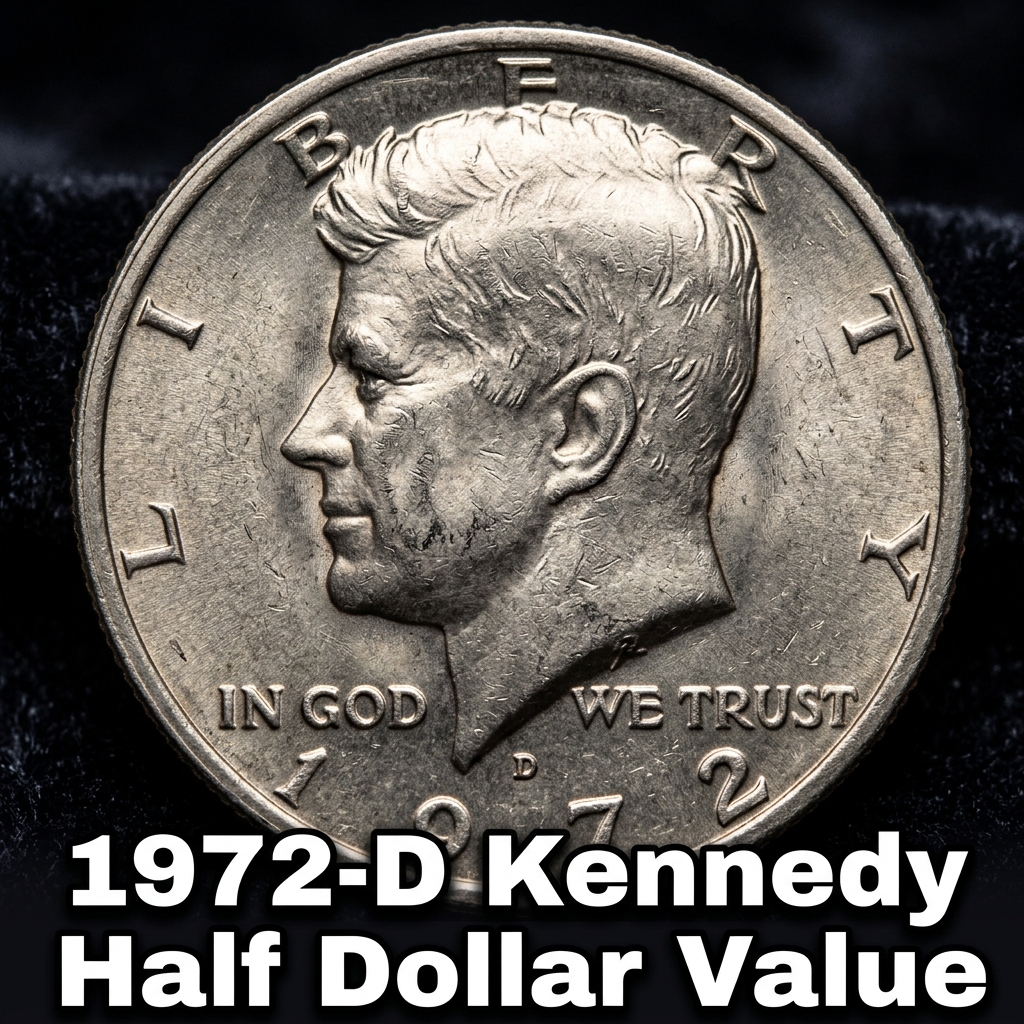
The 1972-D Kennedy Half Dollar is worth anywhere from its face value of $0.50 in circulated condition to over $1,000 for high-grade specimens. If you have just discovered one of these large silver-colored coins in an old jar or a drawer, you are likely wondering if it is a hidden treasure or just spare change.
Common Characteristics and History of the 1972-D Half Dollar
The 1972-D Kennedy Half Dollar was minted at the Denver Mint, as indicated by the small “D” mint mark located on the obverse side, just above the date. By 1972, the United States Mint had fully transitioned away from using silver in the circulating half dollars. Unlike the 1964 version which was 90% silver, or the 1965-1970 versions which were 40% silver, the 1972-D coin is composed of a copper-nickel clad sandwich. This means that while it looks like silver, its value isn’t driven by precious metal content.
When you find one today, the first thing you should do is check the condition. Most coins found in pocket change are considered “circulated,” meaning they show signs of wear, scratches, or loss of detail in President John F. Kennedy’s hair. For a quick assessment of your collection’s potential, using the top coin identifier app can help you distinguish between a common find and a rare variety. Many users of the CoinHix app rely on digital scanning to get an instant idea of what their pocket change might be worth.
Understanding the Value of Circulated vs Uncirculated Coins
For the average American, most 1972-D Kennedy Half Dollars found in circulation are only worth their face value of 50 cents. Because the Denver Mint produced over 153 million of these coins that year, they are not considered rare in a general sense. Most banks still receive these from time to time, and collectors can easily find them in rolls. However, “Uncirculated” or “Mint State” (MS) coins are where the value starts to climb.
Collectors use a scale from 1 to 70 to grade coins. A 1972-D coin that has never been used in trade and retains its original “mint luster” can sell for a few dollars. As the grade reaches MS-66 or MS-67, the price jumps significantly. You can find more detail on these specific 1972 Kennedy Half Dollar prices for Mint State grades to see how much a pristine coin can fetch at auction. Even a slight scratch invisible to the naked eye can lower the price from hundreds of dollars to just a few.
Key Error Varieties that Increase 1972-D Value
While the standard 1972-D is common, error coins are the holy grail for casual hunters. One of the most famous issues to look for is the “No FG” variety. On the reverse side, between the eagle’s left leg and the tail feathers, you should usually see the initials “FG” for Frank Gasparro, the designer. Due to over-polishing of the dies at the mint, these initials sometimes disappeared. A 1972-D “No FG” half dollar can be worth $20 to $100 or more depending on its condition.
Other errors include “clipped planchets,” where the coin is missing a circular bite-out of its edge, or “off-center strikes,” where the image isn’t centered on the metal disk. If you think you’ve found something unusual, the CoinHix app is a great tool for comparing your coin against known error photos. Identifying these anomalies is the fastest way to turn a 50-cent coin into a high-value collector’s item.
1972-D Kennedy Half Dollar Price Chart
To give you a better idea of what to expect, we have compiled the current market estimated values based on the condition of the coin. Keep in mind that professional grading by services like PCGS or NGC is often required to realize the highest prices.
| Condition / Grade | Estimated Value (USD) |
|---|---|
| Circulated (Good to About Uncirculated) | $0.50 – $1.00 |
| Mint State 63 (Uncirculated) | $2.00 – $5.00 |
| Mint State 65 (Gem Uncirculated) | $15.00 – $25.00 |
| Mint State 67 (High Grade) | $250.00 – $600.00 |
| 1972-D “No FG” Error Variety | $20.00 – $450.00 |
How to Inspect Your 1972-D Coin at Home
You don’t need a lab to start grading your coins. First, find a source of bright, natural light. Hold the coin by its edges—never touch the flat surfaces, as skin oils can damage the finish. Look for the “D” mint mark above the date to confirm it’s from Denver. Next, flip it over and look for the “FG” initials. If they are completely missing, you might have the valuable error.
If the coin looks exceptionally shiny and has no visible scratches even under a magnifying glass, it might be worth sending to a professional. You can check this comprehensive 1972 half dollar value guide to see if your coin’s appearance matches the high-value descriptions. Remember that most 1972-D coins show “bag marks” from when they were shipped in large canvas bags, so a truly flawless coin is a rare find indeed.
Is It Worth Keeping the 1972-D Half Dollar?
Many people choose to keep these coins simply because they are part of American history. Even if the current value is only 50 cents, half dollars are no longer a standard part of daily commerce, making them “cool” finds for kids and new collectors. If you have a large amount of them, it is worth the time to scan through them using the CoinHix app to ensure you aren’t spending a rare error coin at the grocery store.
The market for Kennedy Half Dollars remains strong among specialists. While the 1972-D isn’t as famous as the 1964 silver half dollar, its “No FG” error and its potential for high-grade registry sets keep it relevant. Whether you are a seasoned numismatist or someone who just found a coin in the couch cushions, knowing the history and potential of the 1972-D helps you appreciate the change in your pocket.
Frequently Asked Questions
Q: Is the 1972-D Half Dollar made of silver?
A: No, the 1972-D Kennedy Half Dollar is a clad coin made of a copper-nickel alloy. The US Mint stopped using silver in circulating half dollars after 1970.
Q: Where is the mint mark on a 1972-D half dollar?
A: The “D” mint mark is located on the front (obverse) of the coin, right above the middle of the date “1972.”
Q: What is the most expensive 1972-D half dollar ever sold?
A: High-grade specimens in MS-67 or higher can sell for over $1,000 at major auctions, especially if they have been professionally certified by PCGS or NGC.
Q: How can I tell if I have the “No FG” error?
A: Look at the back of the coin. Near the eagle’s right leg (viewer’s right), the initials “FG” should be visible. If the area is completely smooth with no trace of the letters, it is the “No FG” variety.