
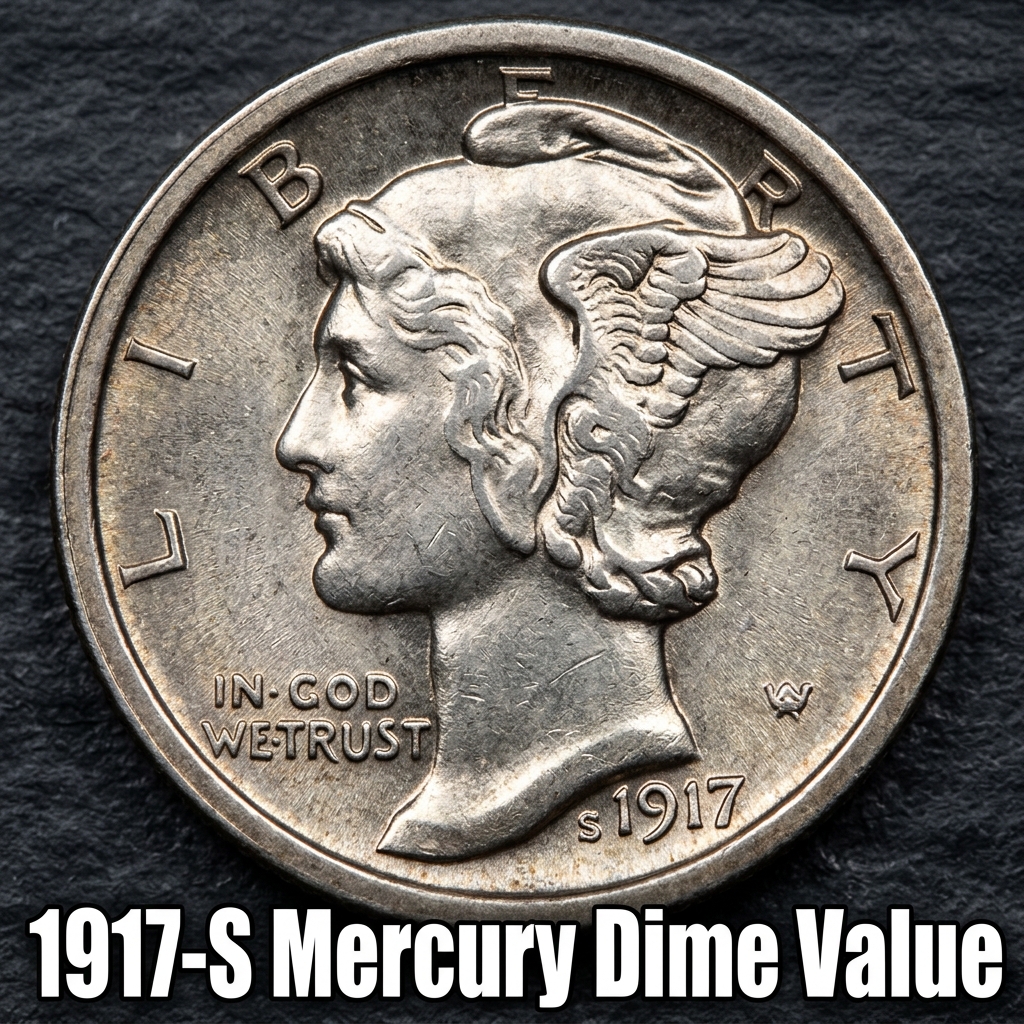
The 1917-S Mercury Dime is worth anywhere from $3 in worn condition to over $1,500 in pristine mint state. If you have recently discovered one of these silver treasures in a collection or an old jar of change, you are likely holding a piece of American history that carries a significant premium over its face value.
The History and Design of the 1917 S Mercury Dime
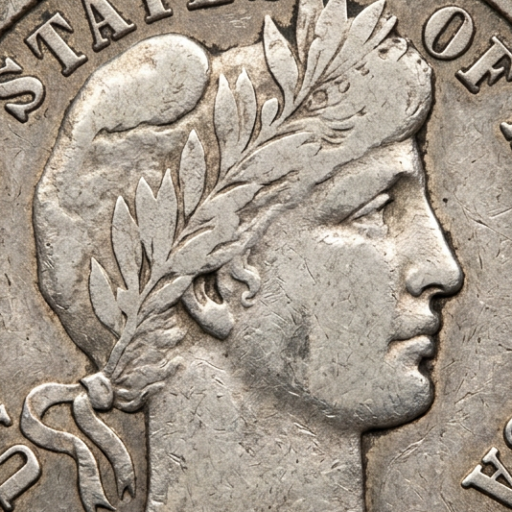
The 1917-S Mercury Dime represents the second year of one of America’s most beloved coin designs. Created by the renowned sculptor Adolph A. Weinman, the coin actually depicts Liberty wearing a winged cap (Phrygian cap), which was intended to symbolize liberty of thought. However, the public quickly mistook the figure for the Roman god Mercury, and the name stuck. These coins were minted during a pivotal time in global history as the United States entered World War I, making them popular among history buffs and numismatists alike.
If you are unsure whether your coin is a genuine 1917-S or perhaps a different mint variety, using a top coin identifier app can provide immediate clarity. The “S” mint mark on this coin indicates it was produced at the San Francisco Mint. During this era, San Francisco often had lower mintage numbers than the main mint in Philadelphia, which frequently leads to higher market values for “S” marked coins in higher grades.
Identifying your coin correctly is the first step toward getting an accurate appraisal. Many people find that the CoinHix app helps them zoom in on the tiny mint mark located on the reverse side, just to the left of the base of the fasces (the bundle of sticks). Because these coins are over 100 years old, the details can be quite worn, so a clear photo and a reliable identification tool are essential for every casual collector.
Understanding the 1917 S Mercury Dime Grading Standards
Value is almost entirely dependent on the “grade” or condition of the coin. In the world of numismatics, coins are graded on a scale from 1 to 70. A “Good-4” coin will look very flat and worn, while a “Mint State-65” coin will look like it just left the mint yesterday. For the 1917-S Mercury Dime, most coins found today are in “Good” to “Fine” condition, meaning they have seen significant circulation.
When examining your dime, look at the hair lines above Liberty’s ear and the feathers on her cap. If these details are visible, your coin is likely in a higher “Extremely Fine” or “About Uncirculated” grade. Collectors also look for “Full Bands” (FB) on the reverse. This refers to the horizontal bands holding the fasces together. If those bands are fully separated and distinct, the 1917-S Mercury Dime price can skyrocket into the thousands of dollars.
For most everyday Americans, the main goal is to determine if the coin is a common “filler” or a high-value rarity. Taking a clear photo and uploading it to CoinHix can help you compare your coin against professional grading images. This allows you to estimate whether your coin is worth the silver melt value or a significant collector premium without having to pay for a professional appraisal immediately.
1917 S Mercury Dime Value Comparison Table
The following table provides an estimated value for the 1917-S Mercury Dime based on various standard conditions. Please note that market prices fluctuate based on the current price of silver and collector demand.
| Condition / Grade | Estimated Market Value |
|---|---|
| Good (G-4) | $3.00 – $4.50 |
| Fine (F-12) | $7.00 – $12.00 |
| Very Fine (VF-20) | $25.00 – $35.00 |
| Extremely Fine (EF-40) | $65.00 – $85.00 |
| Uncirculated (MS-60) | $180.00 – $250.00 |
| Choice Mint State (MS-65+) | $800.00 – $1,600.00+ |
Factors That Influence the Worth of Your Old Silver Dime
Several factors beyond basic wear and tear determine the final price of a 1917-S Mercury Dime. The most obvious factor is the “S” mint mark. While over 27 million 1917-S dimes were struck, this is significantly fewer than the 55 million struck in Philadelphia that same year. Because of this, the San Francisco version maintains a higher value in almost every grade.
Another critical factor is the presence of “eye appeal.” A coin that has developed a beautiful rainbow patina or “toning” over the last century might sell for more than a shiny, blast-white coin to the right buyer. This comprehensive 1917 S Mercury Dime value guide explains how luster and surface marks affect the overall desirability of the coin.
Conversely, damage can drastically lower the value. If someone in the past tried to clean the coin with a cloth or chemicals, it will have fine scratches or an “unnatural” shine. Professional collectors avoid cleaned coins, often paying only the silver scrap price for them. If you aren’t sure if your coin has been cleaned, use the CoinHix app to compare your coin’s surface texture with known original examples.
Are Some 1917 S Mercury Dimes Real Rarities
While the 1917-S isn’t the rarest date in the entire series (that honor goes to the 1916-D), it is considered a “semi-key” date in high grades. Most of the 1917 dimes from San Francisco were put straight into circulation to fuel the booming wartime economy. This means that very few were saved in “Brilliant Uncirculated” condition.
If you happen to find a 1917-S that looks like it has never been touched—with high luster and no wear on the wing of Liberty’s cap—you could be looking at a coin worth over $1,000. These high-end specimens are often sent to professional grading services like PCGS or NGC to be slabbed in plastic for protection and authentication. For the average person, discovering such a coin is like finding a winning lottery ticket in your pocket change.
Always remember that even a heavily worn 1917-S is made of 90% silver. This means it has an intrinsic “melt value” that acts as a floor for the price. As the price of silver goes up, the minimum value of your dime goes up as well, making it a great hedge against inflation even if it isn’t in museum-quality condition.
Frequently Asked Questions About the 1917 S Mercury Dime
Q: Where is the mint mark located on a 1917 S Mercury Dime?
A: The “S” mint mark is located on the reverse (back) of the coin, near the bottom left edge, just to the left of the base of the fasces (the bundle of rods).
Q: Is the 1917 S Mercury Dime made of real silver?
A: Yes, all Mercury Dimes minted between 1916 and 1945 are composed of 90% silver and 10% copper.
Q: Should I clean my 1917 S Mercury Dime to make it look newer?
A: No! You should never clean an old coin. Cleaning can create microscopic scratches and remove the original “skin” of the coin, which can reduce its numismatic value by 50% or more.
Q: How can I tell if my dime has “Full Bands”?
A: Look at the center horizontal bands that wrap around the fasces on the reverse. If there is a clear, uninterrupted line separating the two bands, it is considered a “Full Bands” coin, which is much more valuable to collectors.