
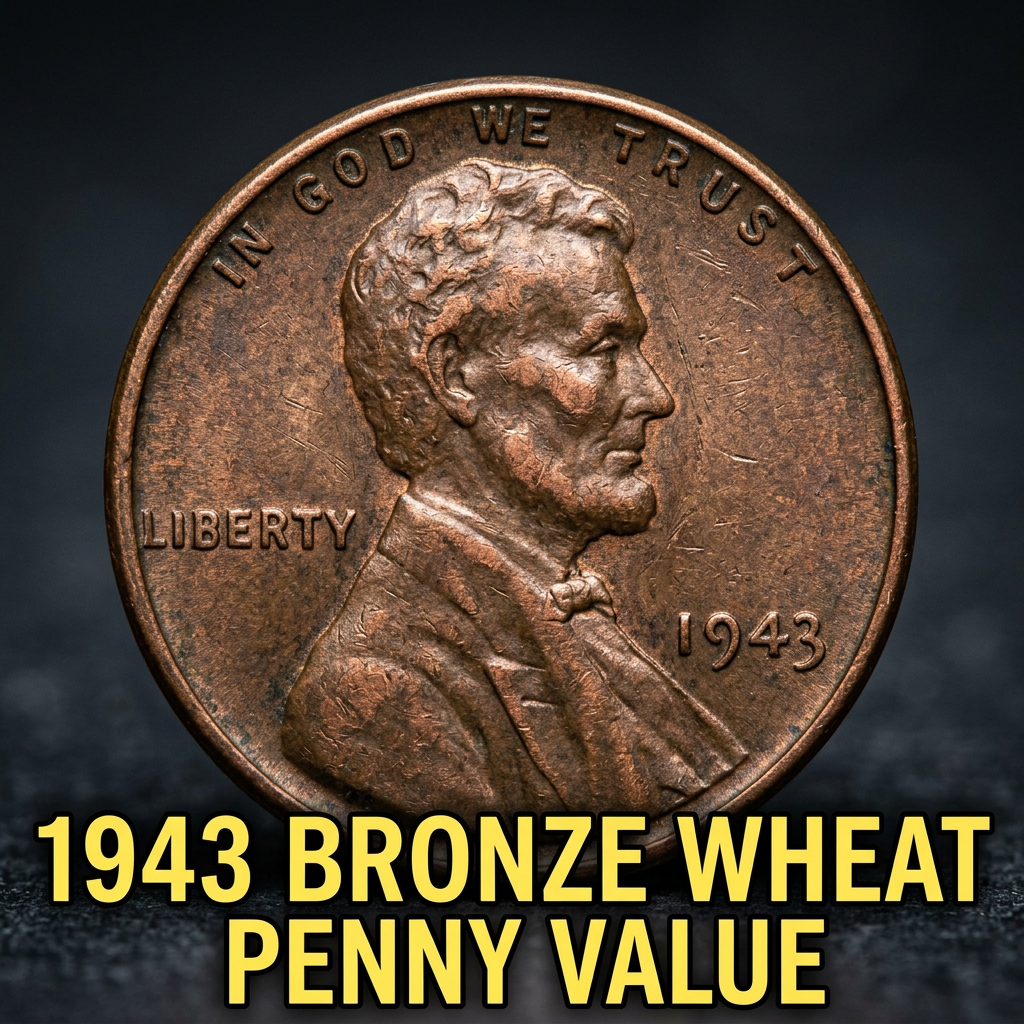
The 1943 Bronze Wheat Penny is worth anywhere from $100,000 in circulated condition to over $1,700,000 for specimens in pristine mint state. This legendary “mistake” coin is arguably the most famous error in American numismatic history, turning a common penny into a life-changing discovery for a lucky few.
Understanding the History of the 1943 Bronze Copper Penny
To understand why this coin is so valuable, we have to look back at World War II. In 1943, the United States military needed copper for shell casings and communications wire. To save this vital resource, the U.S. Mint switched from the traditional bronze composition to zinc-coated steel. Every regular-issue penny struck that year was supposed to be silver-colored and magnetic. However, a tiny handful of bronze planchets (the blank metal disks) left over from 1942 remained stuck in the bins.
When the 1943 production began, these stray bronze blanks were fed into the machines and struck with the 1943 date. It is estimated that only about 20 to 40 of these coins were ever made across the Philadelphia, Denver, and San Francisco mints. If you think you’ve found one of these rare treasures, using the top coin identifier app can be your first step in preliminary verification before seeking a professional appraisal.
Because these coins are so valuable, the market is unfortunately flooded with fakes. Most people who think they have a 1943 copper penny actually have a steel penny that someone has copper-plated at home, or a 1948 penny where the “8” has been shaved down to look like a “3.” Using CoinHix to scan your coin can help you compare high-resolution images of authentic pieces to what you have in your hand.
How Much is a 1943 Bronze Wheat Penny Worth Today?
The value of an authentic 1943 copper penny is astronomical because they are essentially one-of-a-kind errors in the eyes of the public. While a common steel penny is worth about 10 to 25 cents, its copper counterpart is a six-figure or even seven-figure asset. Collectors are willing to pay a massive premium because there are so few known examples in existence.
For those tracking market trends, the 1943 bronze cent value in mint state reflects its status as the “Holy Grail” of 20th-century coins. Even a heavily worn or scratchy version of this coin would sell for more than most people earn in a year. The rarity is simply unparalleled in modern American coinage.
If you are curious about your common 1943 pennies that are silver in color, you should check the 1943 steel penny value guide to see if you have an uncirculated version worth a few dollars. While not as rare as the bronze version, steel pennies are still a fascinating piece of history for any casual collector.
| Condition / Mint Mark | Estimated Value (USD) |
|---|---|
| 1943 Bronze (Philadelphia) – Circulated | $150,000 – $350,000 |
| 1943 Bronze (Philadelphia) – Mint State | $600,000 – $1,000,000+ |
| 1943-S Bronze (San Francisco) | $250,000 – $600,000+ |
| 1943-D Bronze (Denver) – Only 1 Known | $1,700,000+ |
Identifying Your 1943 Lincoln Cent
The most important step for any everyday American who finds a 1943 cent is to run the “Magnet Test.” This is the fastest way to tell if you have the legendary bronze coin or the common steel version. Because steel is magnetic, a regular 1943 penny will stick to a magnet instantly. A real bronze penny, made of copper and tin, will not stick.
If your coin does not stick to a magnet, the next step is to weigh it. A standard 1943 steel penny weighs approximately 2.7 grams. A rare 1943 copper penny weighs approximately 3.1 grams. You will need a digital scale that measures to at least one decimal point to be sure. Most “copper” 1943 coins found today are just steel pennies that were plated with copper for use in chemistry sets or as novelty items decades ago.
If both the magnet test and the scale show promising results, you should use the CoinHix app to document your find and look for reputable auction houses. Never try to clean the coin, as scrubbing away the patina can slash the value of a rare coin by half or more. Professional verification through services like PCGS or NGC is mandatory for a coin of this magnitude.
Why the 1943 Copper Cent Captured America’s Imagination
For decades, the 1943 bronze penny has been the subject of rumors and legends. In the 1940s and 50s, stories circulated that Henry Ford would give a free car to anyone who could find one. While that particular rumor was false, the actual market value of the coin eventually surpassed the price of a car many times over. It represents the ultimate “hidden treasure” because anyone could find one in a jar of pocket change or an old piggy bank.
Because these coins were struck by mistake, they weren’t officially released. They simply slipped into canvas bags alongside millions of steel cents. This means that for a long time, the U.S. Mint even denied they existed. The first one wasn’t discovered until 1947 by a 14-year-old boy named Don Lutes Jr., who found it in his school cafeteria change.
Today, the 1943 bronze penny remains the top prize for hobbyists. While the chances of finding one are low, the payoff is so high that people continue to search through every 1943 penny they encounter. Tools like CoinHix make this search easier by providing instant access to rarity data and expert identification tips right on your smartphone.
Frequently Asked Questions
Q: How can I tell if my 1943 penny is real copper or just plated?
A: The easiest way is the magnet test. If the penny sticks to a magnet, it is a steel coin that has been copper-plated and is worth very little. If it does not stick, you should weigh it; a genuine bronze cent weighs 3.1 grams, while a steel one weighs 2.7 grams.
Q: How many 1943 bronze pennies are actually known to exist?
A: Experts believe there are only about 20 to 40 examples across all mint marks. Most of these were struck at the Philadelphia mint, with only a few from San Francisco and only one confirmed example from the Denver mint.
Q: Is a silver-colored 1943 penny worth anything?
A: Most 1943 silver-colored (steel) pennies are common and worth about 10 to 50 cents depending on their condition. However, if you find a 1944 silver-colored penny (an error where a 1944 date was struck on a 1943 steel blank), that coin can be worth thousands of dollars.
Q: Where should I go if I think I have a real 1943 bronze penny?
A: You should first verify it with the magnet and weight tests. If it passes, contact a reputable third-party grading service like PCGS or NGC. They are the only authorities whose authentication will be accepted by major auction houses.